Chimney Brick & Mortar Repair
Tuckpointing & Masonry Repair in Rochester, WI
Sandy mortar joints, brick faces flaking off and white stains on the chimney are all signs the masonry is taking on water. Ask about it at no cost and with no commitment.
Chimney Brick & Mortar Repair
Sandy mortar joints, brick faces flaking off and white stains on the chimney are all signs the masonry is taking on water. Ask about it at no cost and with no commitment.
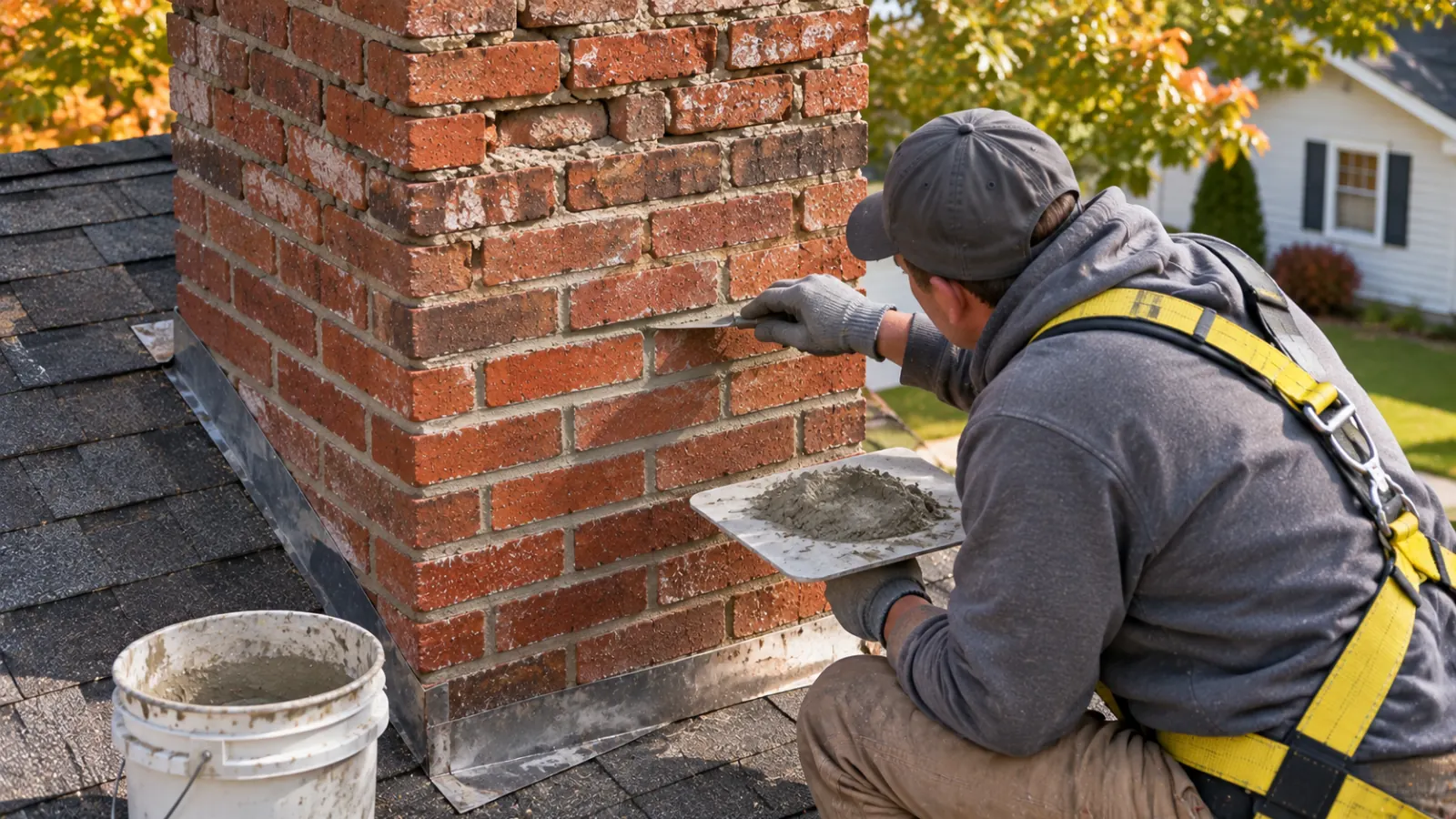
Tuckpointing, also called repointing, means grinding or raking out worn mortar to a consistent depth and packing the joints with fresh mortar in layers. Masonry repair is the broader category: replacing cracked or spalled bricks, resetting loose courses, rebuilding a damaged corner and cleaning up efflorescence. On a chimney, the signs are easy to spot from the yard once you know what to look for: joints that sit noticeably behind the brick face, mortar that crumbles when touched, gaps you can see light through, brick faces that have flaked or popped off, white powdery deposits, and bits of mortar or brick on the roof, in the gutters or on the ground below.
Mortar is supposed to be the softer, sacrificial part of a masonry wall, so it wears first. In Rochester, that wear happens faster because water in the joints freezes and expands every time temperatures swing below freezing, and the top of a chimney stays exposed to wind, rain and snow on all four sides. Diagnosis matters because eroded joints are often a symptom. If the crown is cracked or the flashing is letting water into the brick, new mortar alone will fail again within a few winters. A good assessment looks at why the masonry is wet, not just where it looks worn.
Old mortar is removed to a depth of roughly two to two and a half times the joint width, the joints are cleaned and dampened, and new mortar is packed in and tooled to match. Often only the top section of the chimney, above the roofline, needs it, but the whole chimney should be checked.
When freezing water pops the face off a brick, the softer inner core is exposed and absorbs even more water. Badly spalled bricks are cut out and replaced with brick that matches in size, color and hardness so the repair blends in and weathers evenly.
Many older homes around Racine and Walworth counties have softer brick laid in softer, lime-rich mortar. Repointing those chimneys with a very hard modern mortar can make the bricks crack or spall, because the mortar no longer gives first. The mortar type should suit the age and hardness of the brick.
Courses near the top of a chimney can loosen as mortar fails, and cracks can run through several courses after years of movement. Small areas can be reset in place. Larger loose sections above the roofline often lead to a partial chimney rebuild.
White, chalky deposits are salts carried to the surface by water moving through the masonry. They can be cleaned, but they are a sign of a moisture problem to trace, often a cracked crown or failed flashing that calls for chimney leak repair.
Once the masonry is sound, a vapor-permeable siloxane or silane repellent can reduce how much water the brick absorbs while still letting it dry out. It is a finishing step, not a substitute for repairing open joints or damaged brick.
| Job | What affects the price |
|---|---|
| Tuckpointing above the roofline | Chimney height and width, how many faces need work, roof pitch and safety setup |
| Full-height repointing | Total square footage of joints, scaffolding for exterior chimneys, mortar matching |
| Brick replacement | Number of bricks, finding a close match in size and color, location on the chimney |
| Resetting loose courses | How deep the damage goes, whether the flue or crown must come off to reach it |
| Cleaning and water repellent | Chimney size, level of staining, product chosen, whether repairs are done first |
These are not quotes or published averages. Masonry pricing depends on how much of the chimney needs work and how hard it is to reach, which can only be judged in person. Ask for a written estimate that lists which faces and courses are included, the mortar type, and how extra damage found during grinding would be handled.
Smearing a thin layer of new mortar over old joints, sometimes called a skim coat or butter joint, looks fine for a season and then pops off. Proper tuckpointing removes the old mortar to sound material first.
The new mortar should be compatible with the existing brick in strength and color. Ask what mortar type is being used and why, especially on an older home.
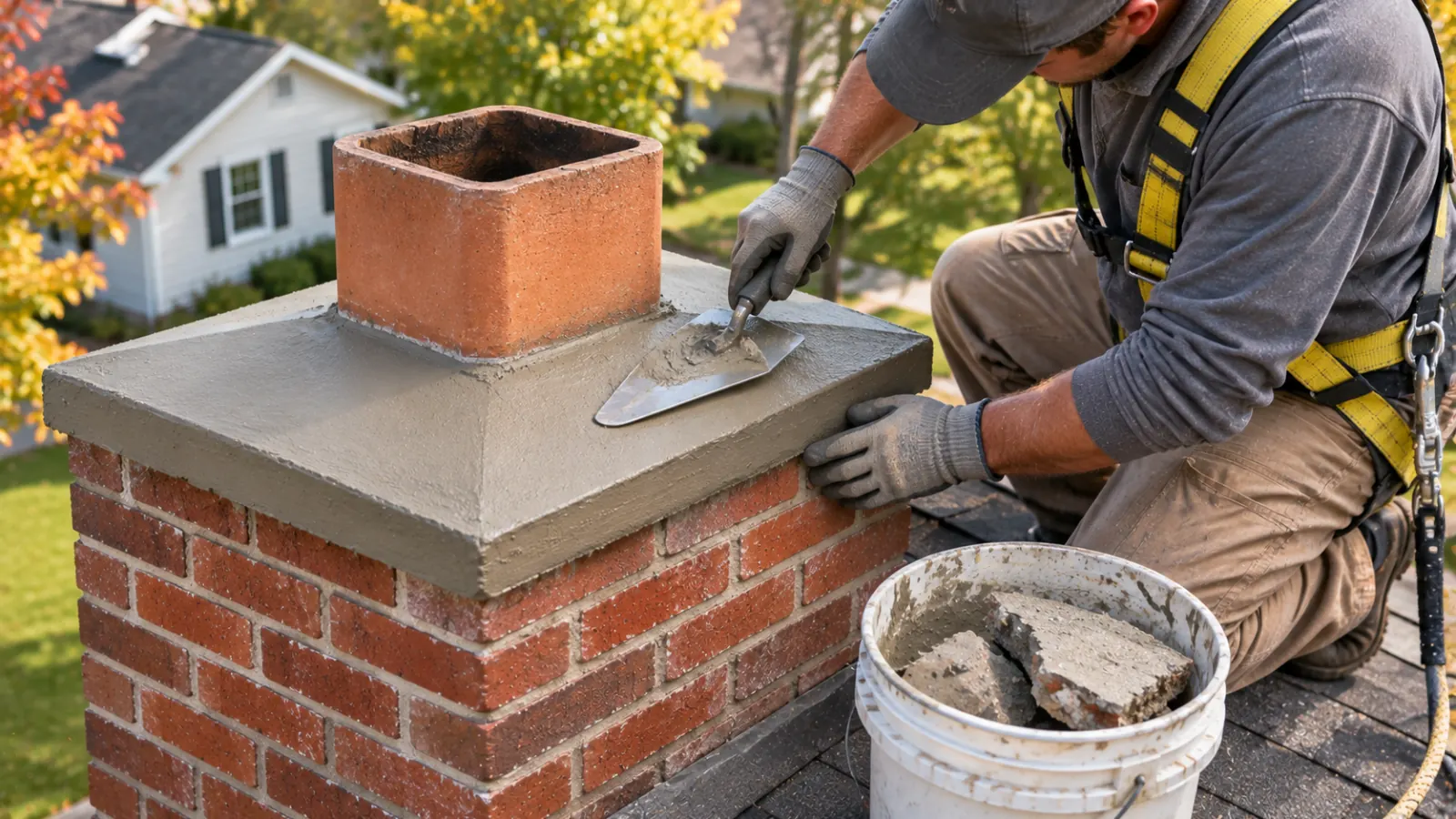
If the crown, cap or flashing is sending water into the brick, the estimate should cover that too, or explain why it is not needed. Otherwise the new joints face the same water.
Mortar needs time above freezing to cure. In Wisconsin that usually means late spring through early fall, with protection if temperatures drop soon after the work.
Describe what the brick and joints look like from the ground and ask whether tuckpointing, brick replacement or something more is needed.
Free — no obligations
Call 262-218-2543 or request an estimate with a short description, such as missing mortar, flaking brick or debris on the roof. Ground-level photos are useful.
The chimney is checked up close: mortar condition, brick hardness and damage, crown, cap, flashing and any signs of movement or leaning.
Go over which areas need repointing or brick replacement, the mortar to be used, setup and access, and whether related crown or flashing work is recommended.
Joints are cut out, cleaned and repacked, damaged bricks replaced, and the work protected while it cures. Changes in scope should be explained before they happen.
Look at the chimney after the first winter for new cracking or staining. Keep the estimate and invoice with your home records.
Well-done repointing with a compatible mortar can last for decades, but the exposed top of a chimney wears faster than a sheltered house wall. Lifespan depends heavily on keeping water out from above. A sound crown, a cap and good flashing do more to protect new joints than anything applied to the mortar itself.
People use the terms interchangeably for replacing worn mortar. Strictly speaking, traditional tuckpointing used a colored mortar with a thin contrasting line to make joints look crisp, while repointing simply means renewing the mortar. On most chimneys around Rochester, the work described as tuckpointing is repointing.
Minor surface flaking can sometimes be left alone once the source of moisture is fixed. Bricks that have lost their face, are crumbling or are cracked through should be replaced, because the exposed core absorbs water and keeps deteriorating. Patching compounds rarely match well and tend to fall out after a few freeze-thaw cycles.
Small areas of worn mortar are not an emergency, but they get worse each winter. Once joints are open, water reaches the inside of the chimney and the flue liner, and loose bricks near the top can eventually fall. Plan repairs for the next warm-weather window rather than letting another few seasons pass.