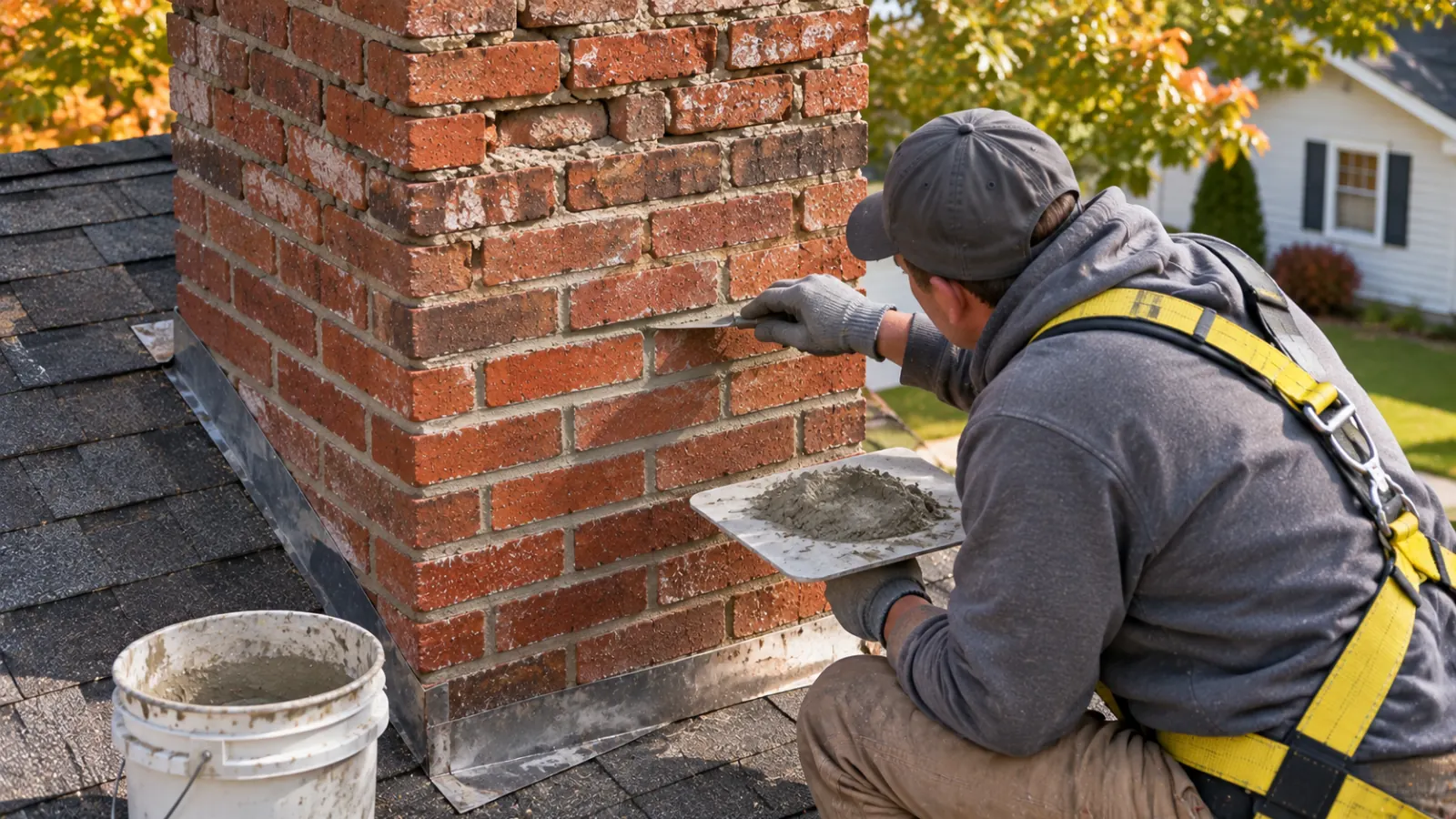
Partial & Full Chimney Rebuilds
When bricks are loose, the chimney leans or repairs keep failing in the same spot, rebuilding the damaged section is often the safer long-term answer. You can ask about it without cost or commitment.
A chimney rebuild means taking the damaged masonry down to sound brick and laying it back up with new brick, mortar, crown, flashing and cap. Most rebuilds are partial: the section above the roofline, which takes the most weather, is removed and rebuilt while the lower chimney stays in place. A full rebuild from the foundation or firebox up is less common and usually tied to structural problems. Signs a rebuild may be needed include a chimney that leans or has pulled away from the house, bricks that are loose or falling, large areas of spalled brick, deep cracks running through many courses, mortar so far gone that bricks can be lifted by hand, and a history of tuckpointing or crown repairs that keep failing.
Every rebuild decision should start with an honest look at how much of the chimney is actually sound. Freeze-thaw damage in Rochester usually starts at the top and works downward, so the upper courses and the crown are often far worse than the brick just below the roofline. Water that got in through the crown or flashing for years may have weakened the masonry from the inside even where the outside looks fine. A careful assessment identifies where sound masonry begins, so the rebuild covers what needs it and the cause of the damage is fixed along with it.
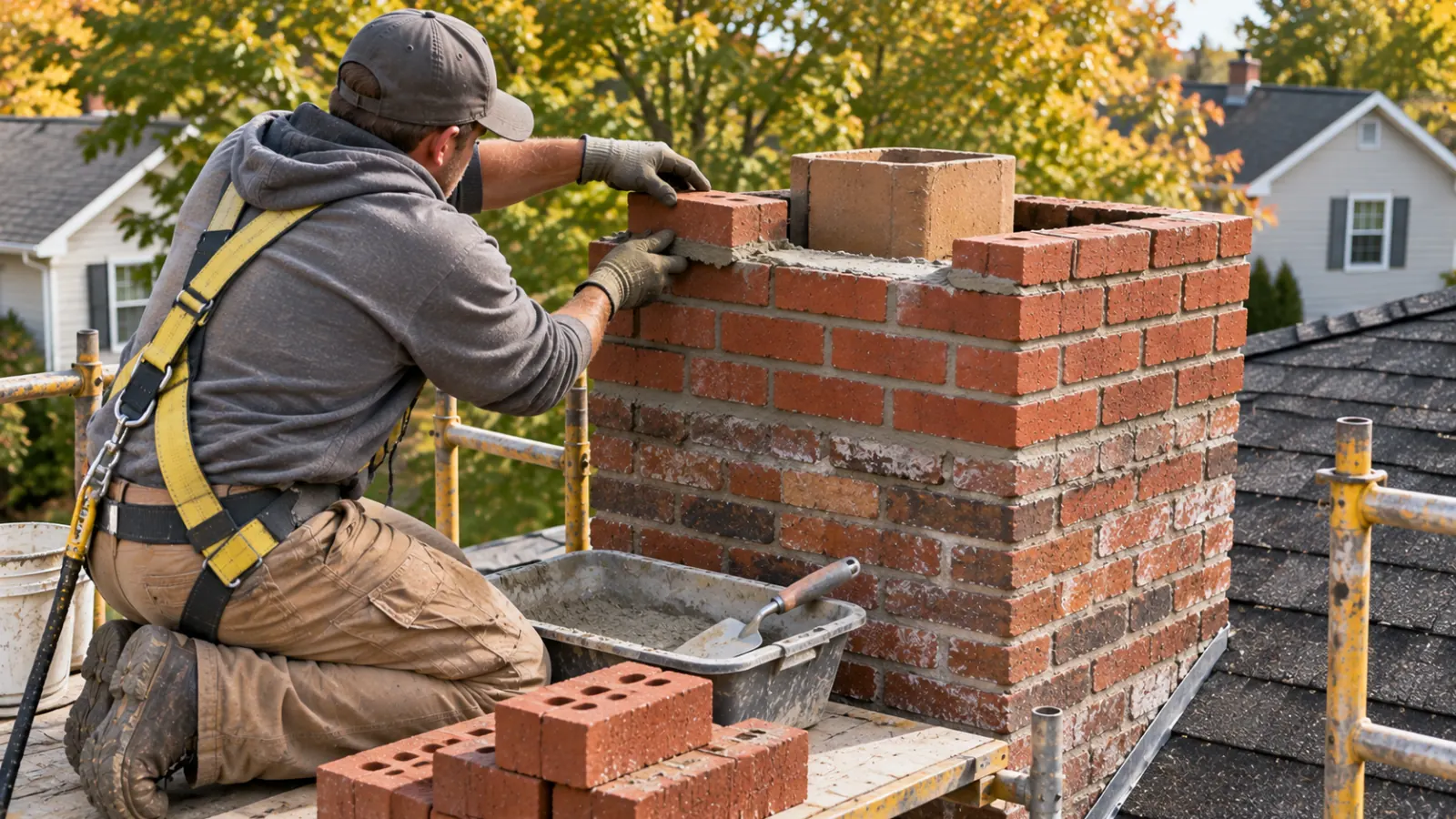
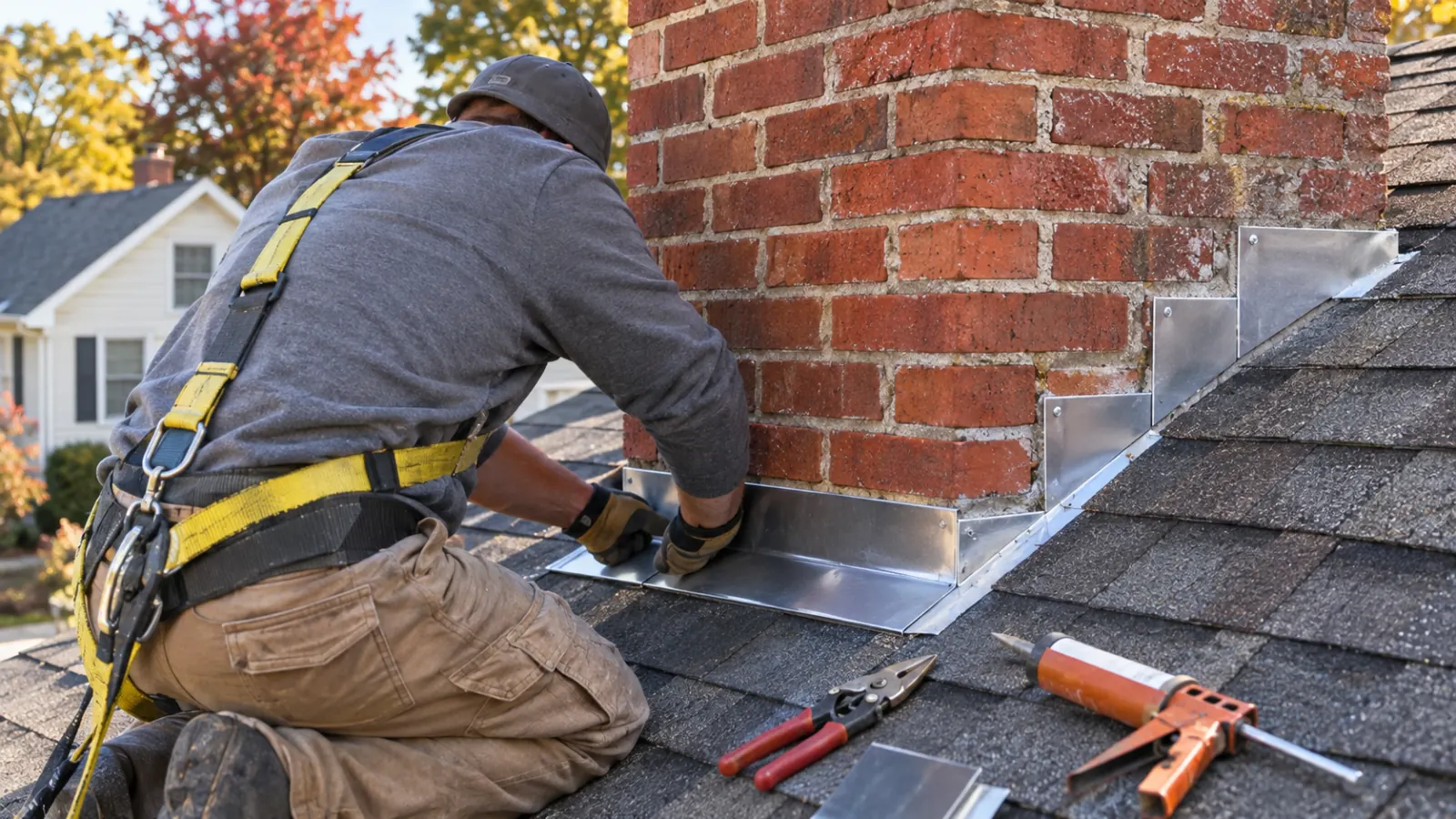
The most common rebuild. Masonry is removed down to sound courses near or just below the roof, then rebuilt with new brick and mortar, a new crown, new flashing and a cap. It addresses the part of the chimney that weathers hardest.
An exterior chimney that tilts away from the house or shows a widening gap at the wall may have a footing or structural problem. The cause needs to be understood first; rebuilding the top alone will not fix a chimney that is moving from the bottom.
High winds, a falling tree limb or ice can knock bricks loose or crack the top of a chimney. Document the damage with photos from the ground and check with your insurer about what your policy covers before the masonry is removed.
Some older homes have a chimney that no longer serves any appliance after a furnace upgrade. Depending on the house, it may be repaired, capped, shortened below the roofline or removed and the roof patched. Each option has trade-offs worth discussing.
On older homes, the goal is usually a rebuild that looks original. That means finding brick close in size, color and texture, matching the mortar color and joint style, and keeping details like corbelling at the top where they exist.
With the top of the chimney open, it is often the easiest time to replace damaged flue tile or install a stainless liner. If the flue is cracked, chimney liner repair and relining can be planned into the same project.
| Job | What affects the price |
|---|---|
| Partial rebuild above the roofline | Height and width of the section, number of flues, roof pitch, brick matching |
| Full-height rebuild | Overall chimney size, scaffolding, footing condition, interior finishes affected |
| New crown, cap and flashing | Included in most rebuilds; size, materials and whether a cricket is needed |
| Flue liner work | New clay tile versus stainless liner, appliance requirements |
| Roof and interior repairs | Shingles around the chimney, roof decking, drywall or framing damaged by past leaks |
These are cost factors, not prices or published averages. A rebuild estimate depends on how much masonry has to come down, which is sometimes clearer only once demolition starts. Ask for a written estimate that states how many courses or feet are included, the brick and mortar to be used, and how work below that point would be priced if needed.

If most of the bricks are solid and only the joints are worn, tuckpointing may be enough. If bricks are loose, cracked through or spalled across large areas, rebuilding that section usually lasts longer.
A rebuild should fix the cause along with the masonry: a properly built crown, a cap, correct flashing and, if needed, a liner, so the new brick is not exposed to the same water.
If the chimney no longer serves an appliance, ask whether rebuilding, shortening or removing it makes the most sense for the house, the roof and resale.
Structural masonry work can require a permit from your municipality. In Rochester, ask the village’s building inspection office. The contractor typically handles permits and inspections.
Describe the damage you can see and how long it has been developing, and ask whether a repair or a rebuild makes more sense.
Free — no obligations
Call 262-218-2543 or request an estimate with what you’ve noticed, such as loose bricks, leaning or debris on the roof. If bricks are falling, keep people away from the area below.
The masonry, crown, flue, flashing and the chimney’s connection to the house are checked to find where sound brick begins and why the damage happened.
Review how far down the rebuild goes, the brick and mortar to match, liner and crown details, roof protection, any permit needed and how weather could affect the schedule.
The damaged section is removed, debris is lowered safely, and the chimney is rebuilt course by course with a new crown, flashing and cap. Changes in scope should be explained first.
Review the finished chimney, the flashing and the cleanup. Keep the estimate, invoice and any permit paperwork with your home records.
Warning signs include a visible lean, a gap between the chimney and the house wall, bricks falling or easily moved by hand, and large cracks through the masonry. If you see any of these, avoid standing below the chimney, stop using the fireplace or stove it serves, and have it assessed promptly.
Often it can come close. Brick is available in many sizes, colors and textures, and reclaimed brick is sometimes an option for older homes. Mortar color and joint style matter just as much for the final look. Ask to see samples before the work is scheduled.
A partial rebuild above the roofline is often a matter of days once materials are on hand, while larger rebuilds take longer. Weather plays a big role in Wisconsin, since mortar and concrete need temperatures above freezing to cure. Ask for a realistic schedule that accounts for the season.
Some shingles around the chimney are usually removed so new flashing can be installed correctly, and the roof should be protected from falling debris during demolition. A good plan explains how the roof will be protected and patched, and who handles any shingle work.