Chimney Repair Around the Phantom Lakes
Chimney Repair in Mukwonago, WI
Describe your chimney problem and ask about service in Mukwonago. It’s a no-cost question with no strings attached.
Chimney Repair Around the Phantom Lakes
Describe your chimney problem and ask about service in Mukwonago. It’s a no-cost question with no strings attached.
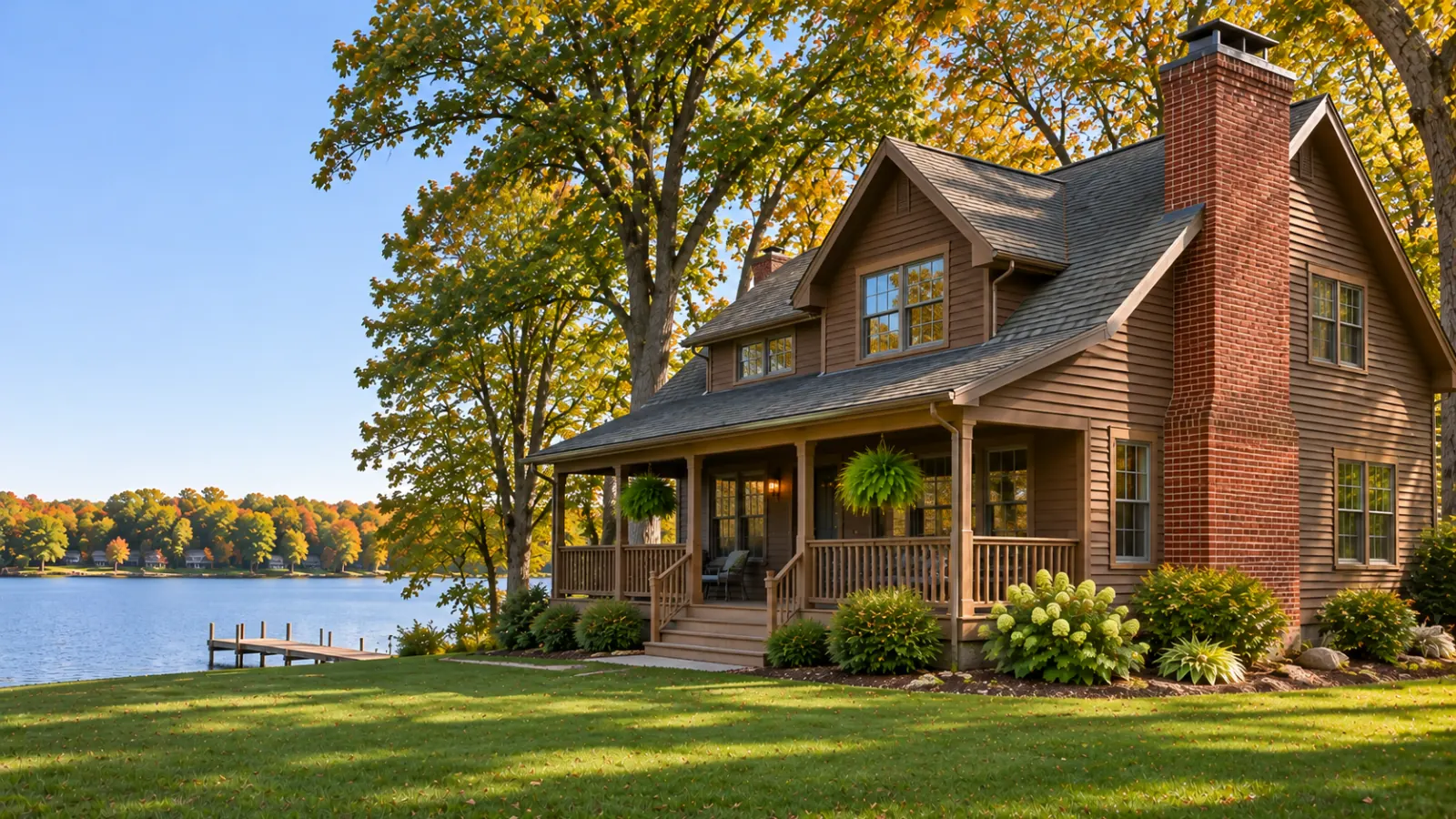
Mukwonago’s housing is mostly newer than the rest of western Racine County, but it has deep roots. Census estimates put the median home here around 1990, with only a small share built before 1940, so most chimneys are fireplace chimneys on 1970s through 2000s homes, many in brick or stone veneer and many with framed chases and metal covers. Around the Upper and Lower Phantom Lakes, cabins and cottages from the lakes’ resort era sit beside newer year-round homes. A small historic core near Main Street includes some of the oldest homes in the region. Every one of these chimneys faces Southeast Wisconsin freeze-thaw winters, and lakeside trees and humidity keep many of them damp longer.
Most chimney work in Mukwonago starts with a repair: replacing a rusted chase cover, fixing a cracked crown, resealing flashing or relining a flue for a new insert. The village was a Potawatomi settlement long before it incorporated in 1905, and the Phantom Lakes have hosted cabins, resorts and camps for generations, including the Phantom Lake YMCA Camp, founded in 1896. Mukwonago is mostly in Waukesha County, with a small part in Walworth County, and had about 8,300 residents in 2020.
The village’s oldest buildings are near its historic center. The Wisconsin Historical Society records a Greek Revival house at 417 Main Street built in 1841 and the former Mukwonago House on North Rochester Street, with a main block from 1846, and the village has its own Historic Preservation Commission. Older homes around the center often have original brick chimneys with soft mortar and thin crowns that have weathered well over a century of winters.
Upper Phantom Lake (about 110 acres) and Lower Phantom Lake (about 373 acres) are inside the village, managed by the Phantom Lakes Management District since 1981. Homes around the lakes range from converted cottages to large newer houses, and wooded shorelines mean leaves, moss and shade on many chimneys. Beyond the lakes, subdivisions built from the 1970s onward make up most of the village’s housing, with fireplace chimneys and factory-built chases now reaching the age when crowns, covers and flashing need attention.
Across the 53149 zip code, Mukwonago chimneys share the same challenges: freeze-thaw winters, damp lakeside sites and aging chase covers and flashing.
Factory-built fireplaces in framed chases are common in Mukwonago’s newer homes. Original galvanized chase covers often rust, sag and pool water after 20 or more years, leaking into the chase and staining walls beside the fireplace.
Manufactured stone chimneys rely on flashing, a crown and a weather barrier behind the stone. If any of these fail, water can get behind the veneer and show up indoors. See chimney leak repair.
Trees around the Phantom Lakes drop debris that holds moisture on the crown. Combined with freeze-thaw cycles, that cracks crowns faster. Crown repair and a cap help keep water out.
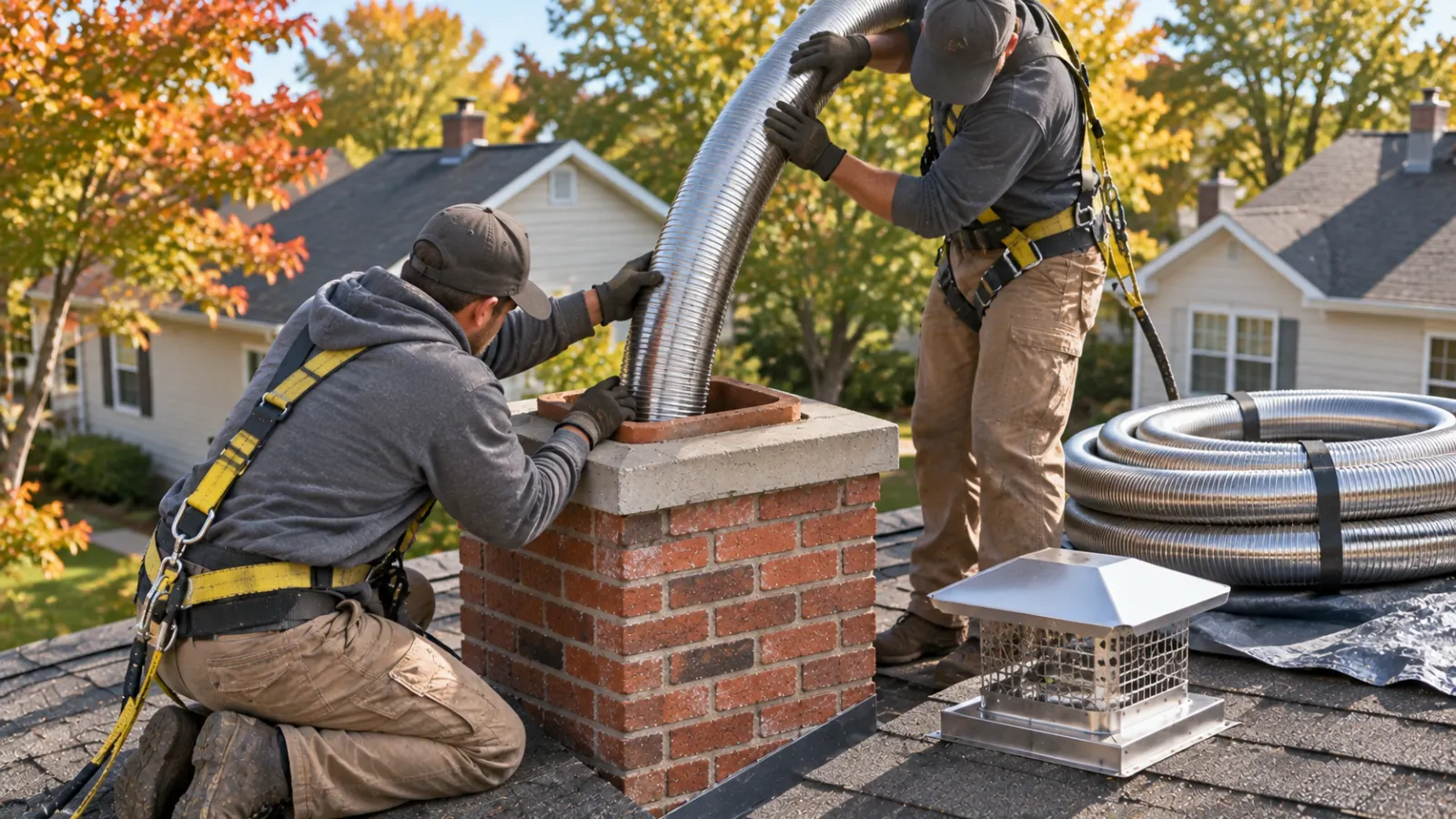
Many homeowners add wood or gas inserts to existing fireplaces. An insert typically needs a dedicated, properly sized liner to vent safely. See chimney liner repair and relining.
Historic homes near the village center often have soft brick and lime mortar. Repairs should use compatible mortar so the brick isn’t damaged. See tuckpointing and masonry repair.
Seasonal cabins converted to year-round homes may have chimneys that went years without inspection. Nests, cracked tiles or missing liners are common and should be checked before the chimney is used again.
Masonry, stone veneer and factory-built chases need very different repairs. The estimate should match how your chimney is built.
Leaks can start at the cover, crown, flashing or veneer and appear well below. The repair should target the actual entry point.
Masonry work needs above-freezing weather to cure. Schedule crown and brick repairs in the warmer months, before heating season.
Ask what materials are proposed and how hidden damage, like rotted chase framing, would be handled. Confirm service for your Mukwonago address first.
Most Mukwonago chimneys are young enough that repair is the answer: a new chase cover, a sealed or replaced crown, new flashing, a cap or a liner for an insert. Repair makes sense when the masonry or chase framing is sound and the problem is limited to one area.
A chimney rebuild is more likely on the village’s older homes, or where years of leaks have left loose bricks, spalling or rotted chase framing. For historic homes near the center, matching the original brick and mortar is an important part of the plan. Neighboring East Troy and Muskego have a similar mix of lake homes and older brick.
Learn more about each type of chimney repair work:
The Village of Mukwonago’s Building Inspection department handles permits, and its permit list asks for an online application that includes project cost. The village notes that the licensed contractor typically obtains the permits and calls for inspections. Ask whether your project needs one, especially for a rebuild or new liner, and confirm with the village.
It depends on the material and shape. Galvanized covers often rust within a couple of decades, especially when flat. Stainless steel covers with a slope or crease to shed water last considerably longer. If you see rust stains running down the siding of your chase, the cover is likely failing.
Yes. Chimney Repair Rochester serves Mukwonago homes in both Waukesha and Walworth counties. Include your address when you call or request an estimate so your request reaches a contractor who covers your location.
Often, yes, but it usually requires a liner sized to the insert and running the full height of the chimney. The chimney should be inspected first to make sure the masonry, firebox and flue are in good condition. Ask about the liner and installation requirements when you get an estimate.
Have a leaking chase, cracked crown or chimney question in Mukwonago? Call or request an estimate with your address and a short description.
Free — no obligations