Southeast Wisconsin Chimney Leak Repair
A stain on the ceiling beside the chimney, drips in the firebox or a damp smell after rain usually means water is getting in somewhere above. Asking about it is free, with nothing to sign.
Chimney leak repair covers every way rain and snowmelt find their way into a house through or around the chimney. The signs are usually indoors first: a brown ring on the ceiling or wall next to the chimney, peeling paint or bubbling drywall on the chimney breast, water in the firebox or on the damper, rust on the damper plate, a musty odor from the fireplace on humid days, or wet insulation and stained framing in the attic. Outside, look for white efflorescence on the brick, dark wet patches that linger after a storm, flashing that has pulled away from the brick, and a cap that is rusted, bent or missing.
The hard part is that the stain is rarely where the water enters. Water can come through a cracked crown, run down inside the flue, soak through porous brick, or slip behind loose step flashing and travel along a rafter before it shows up. Rochester’s climate adds to the puzzle. Snow piles up on the uphill side of a chimney, melts on sunny winter days and refreezes at night, forcing water under shingles and flashing. Spring thaw and heavy summer storms then expose any gap. A good repair starts by testing and tracing the actual entry point.
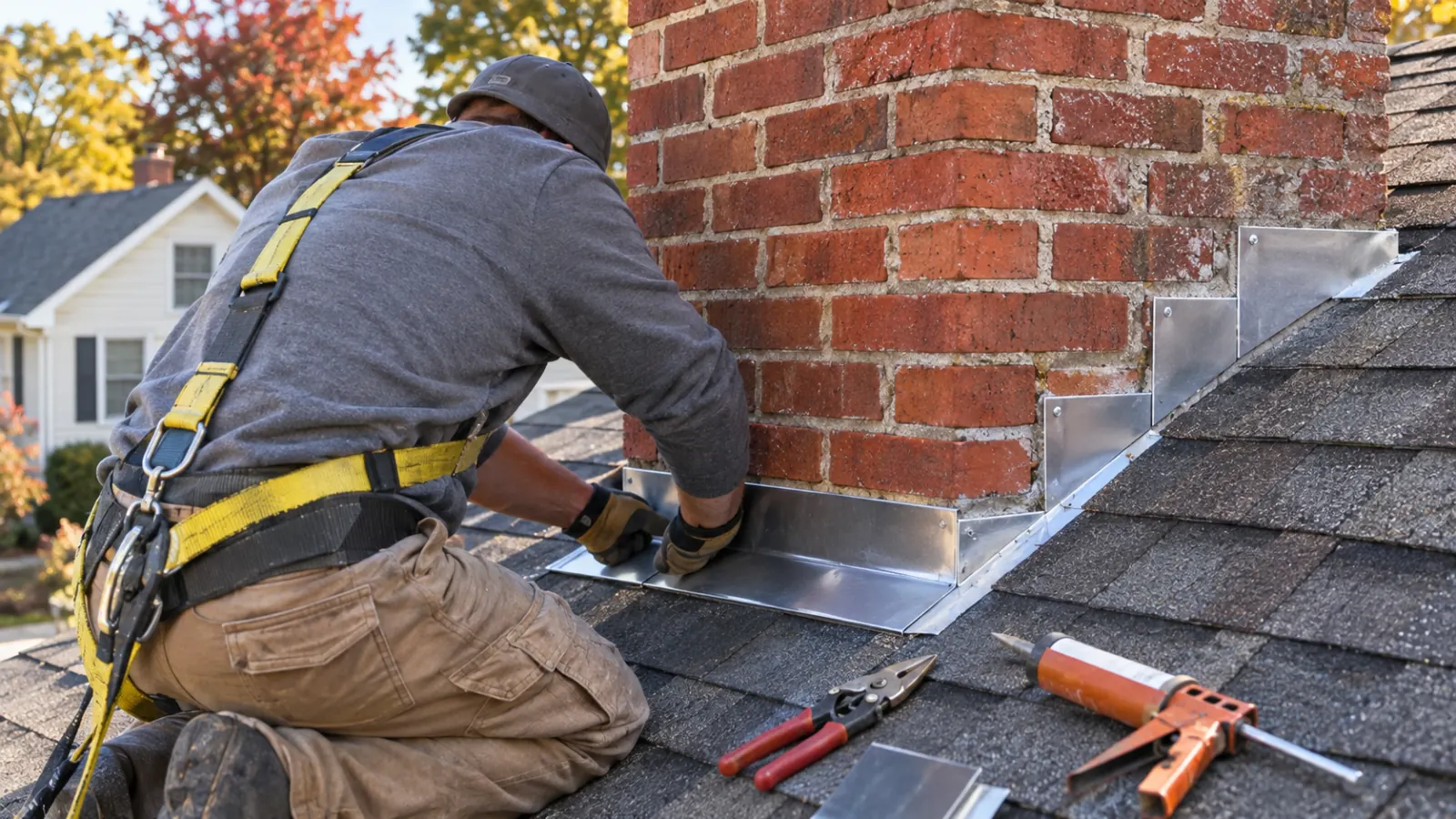
Where a chimney passes through the roof, metal step flashing is woven into the shingles and covered by counterflashing set into a mortar joint. When the counterflashing is only caulked onto the brick face, or the sealant has dried and cracked, water runs behind it. A proper fix cuts a reglet into the mortar and installs new flashing rather than adding more caulk.
A wide chimney on a sloped roof creates a dam where snow, ice and debris collect. A cricket, or saddle, is a small peaked section built behind the chimney that splits the water around it. Wider chimneys without one are a frequent source of winter leaks, and adding one is usually done together with new flashing.
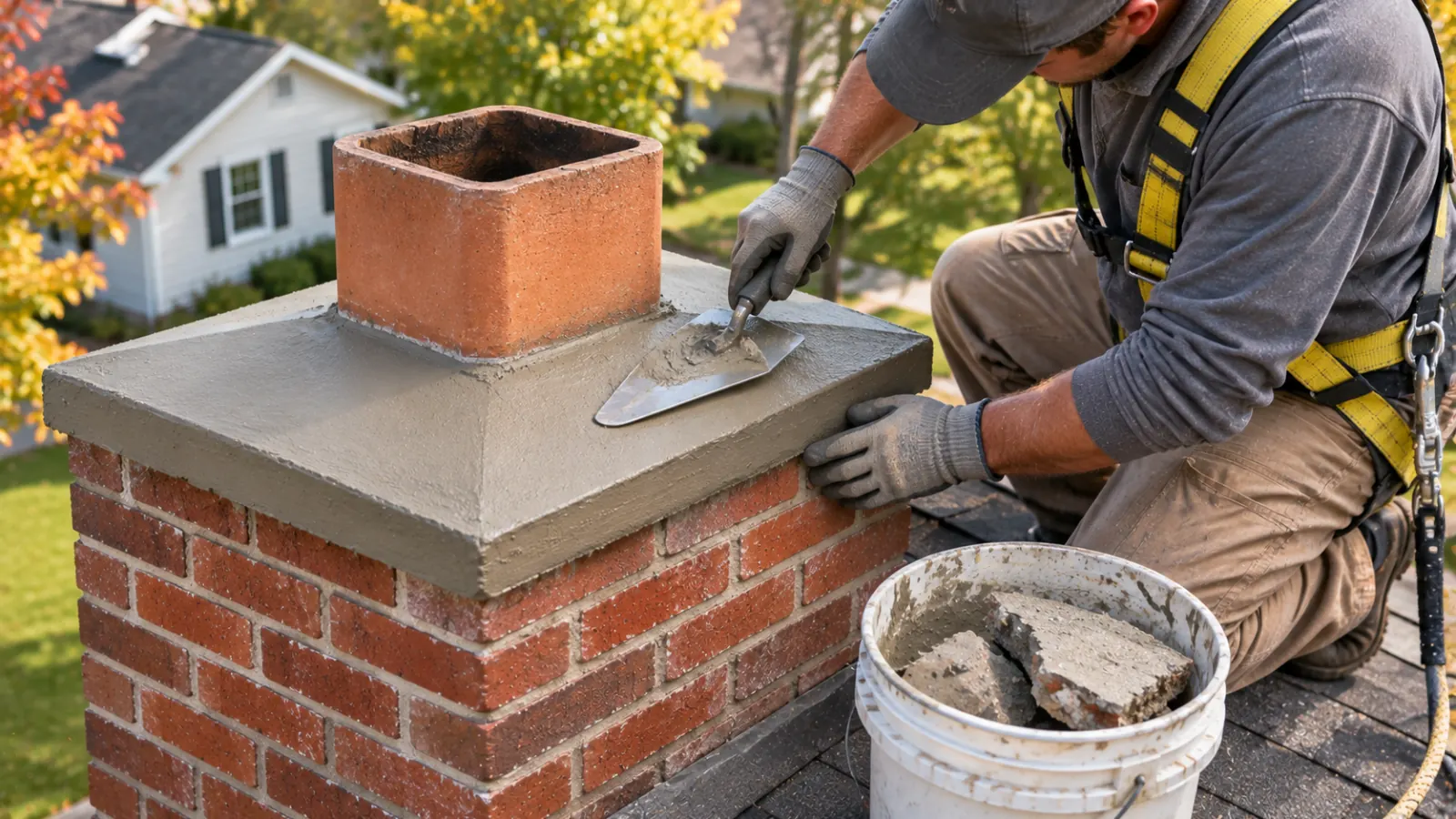
The concrete or mortar slab on top of the chimney is meant to shed water. Once it cracks, water drops straight into the brick and the space around the flue tile. Small cracks can be sealed with a flexible crown coating, while a crumbling crown needs to be replaced. See chimney crown repair for the details.
An open flue lets rain, snow, leaves and animals straight down the chimney. A properly sized cap with a mesh screen keeps water out of the flue and the firebox. Caps also rust out or blow off over time, so a quick check of the cap is part of any leak assessment.
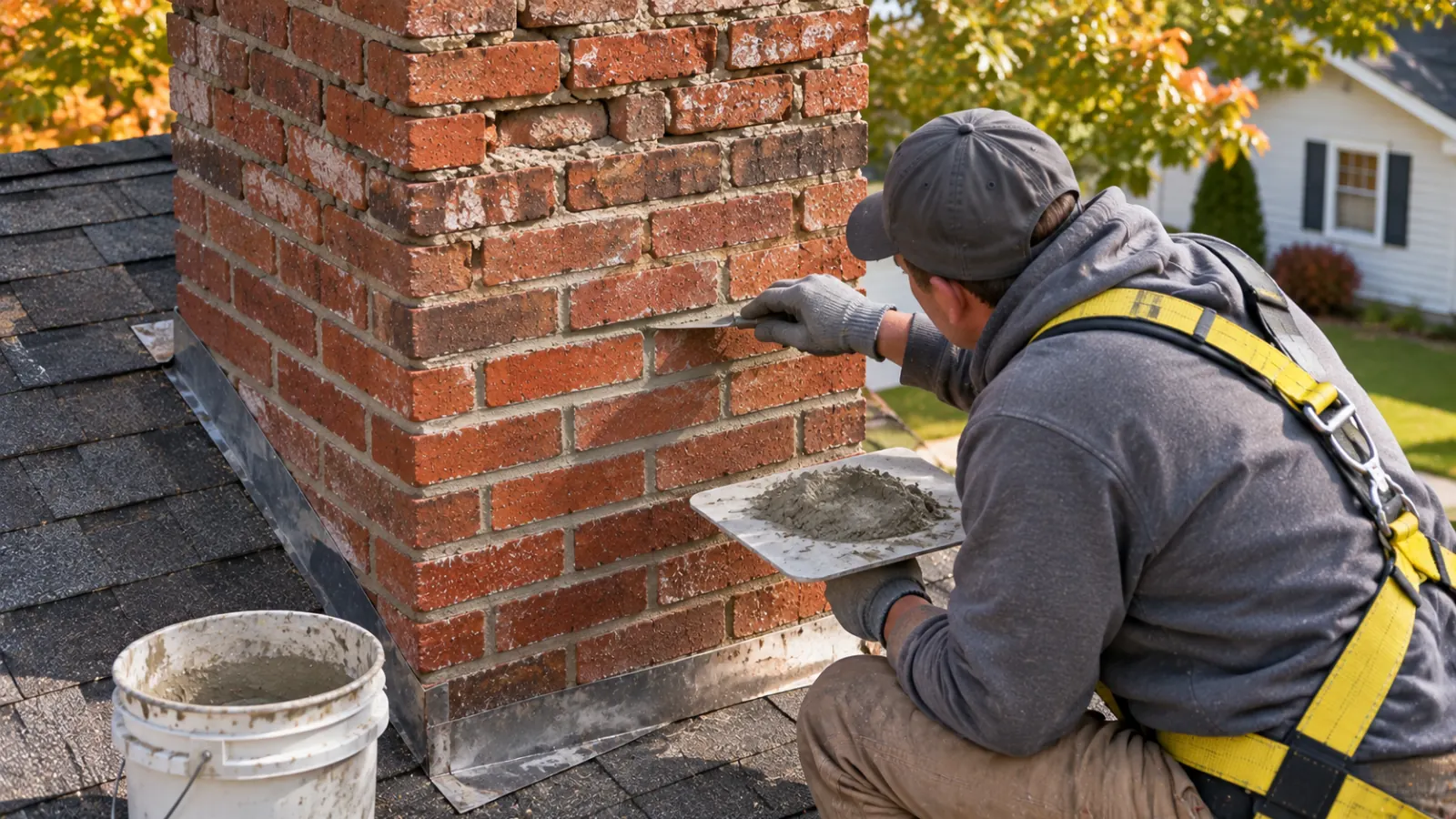
Older, softer brick and eroded mortar absorb a surprising amount of water. When the masonry itself is soaking it up, the fix is usually tuckpointing and masonry repair followed, where appropriate, by a breathable, vapor-permeable water repellent made for masonry, never a film-forming sealer that traps moisture inside.
Not every wet chimney is a rain leak. A modern gas furnace or water heater vented into an oversized or unlined masonry flue can produce acidic condensation that stains walls and breaks down mortar from the inside. That points to chimney liner repair and relining rather than exterior work.
| Job | What affects the price |
|---|---|
| Flashing replacement | Chimney width, roof pitch, shingle condition around the chimney, whether a cricket is needed |
| Crown sealing or replacement | Crack size versus full failure, chimney size, number of flues, access to the top |
| Chimney cap | Single or multi-flue cap, stainless versus galvanized, flue size and shape |
| Masonry and water repellent | How much mortar or brick needs work, matching the existing brick, scaffold or roof setup |
| Interior damage | Wet insulation, stained drywall, rotted roof decking or framing found once flashing is removed |
These are categories, not quotes or local averages. Real pricing comes after the chimney has been looked at up close, including the roof around it and the attic below. Ask for a written estimate that separates the leak repair itself from any interior repairs or hidden damage that might be found once old flashing comes off.

A good assessment checks the cap, crown, masonry, flashing and flue, and may water-test sections to see which one actually leaks. Fixing the most visible problem while missing the real one means another stain next spring.
Caulk alone on chimney flashing is a short-term patch. Long-lasting work ties step flashing into the shingles and seats counterflashing into the mortar joints so water is directed out, not just held back.
Brick needs to dry out. Products that seal the surface with a glossy film can trap moisture and make freeze-thaw damage worse. Ask what product is proposed and whether it is vapor-permeable.
A long-running leak can soften roof decking or framing beside the chimney. The estimate should explain what happens, and how it is priced, if rot turns up once the old materials are removed.
Describe the stain or drip you’re seeing and where it shows up, and ask what is likely causing it.
Free — no obligations
Call 262-218-2543 or request an estimate and mention where the water appears, when it started and whether it happens with rain, snowmelt or both. Photos taken indoors or from the ground help.
The cap, crown, brick, mortar joints and flashing are checked from the roof, along with the attic and the fireplace or appliance connection inside.
Go over what was found, which repair addresses the source, the materials proposed and what could change the scope once work begins.
The work should follow the agreed scope. If more damage turns up, it should be explained and priced before anything extra is done.
Check the old stain area after the next heavy rain and the next thaw. Keep the estimate and invoice with your home records in case questions come up later.
Snow collects on the uphill side of a chimney and around the flashing. When it melts during the day and refreezes at night, an ice dam can form and push water under shingles and flashing that shed ordinary rain without trouble. Leaks that show up only during thaws often point to flashing, a missing cricket, or snow sitting on a damaged crown.
Water itself is mostly a damage problem: stained ceilings, wet insulation, rotting wood and rusted dampers. Over time, though, moisture breaks down mortar and flue tiles, which can let heat or combustion gases reach places they shouldn’t. If the flue lining may be damaged, have it checked before the next heating season.
Only the right product in the right place. A breathable masonry water repellent can help sound brick shed water, but it will not fix a cracked crown, failed flashing or open mortar joints. Film-forming paints and sealers can trap moisture and make spalling worse. Fix the entry point first, then decide whether a repellent is worth adding.
Coverage depends on your policy and on the cause. Sudden storm damage is treated differently from gradual wear and maintenance issues. Take dated photos of interior and exterior damage and ask your insurer what applies. A written description of the cause from the assessment can help when you talk to them.
As soon as practical. Each wet freeze-thaw cycle widens cracks in the masonry, and water inside the walls can lead to mold and rot that cost more than the original repair. If a leak appears in late fall, a temporary measure may be needed until masonry work can be done in warmer weather.