Chimney Caps & Chase Covers
Chimney Cap & Chase Cover Replacement in Rochester, WI
A missing cap or a rusted chase cover lets rain, snow and animals straight into the chimney. Describe what you see on top of yours and get an answer for free.
Chimney Caps & Chase Covers
A missing cap or a rusted chase cover lets rain, snow and animals straight into the chimney. Describe what you see on top of yours and get an answer for free.
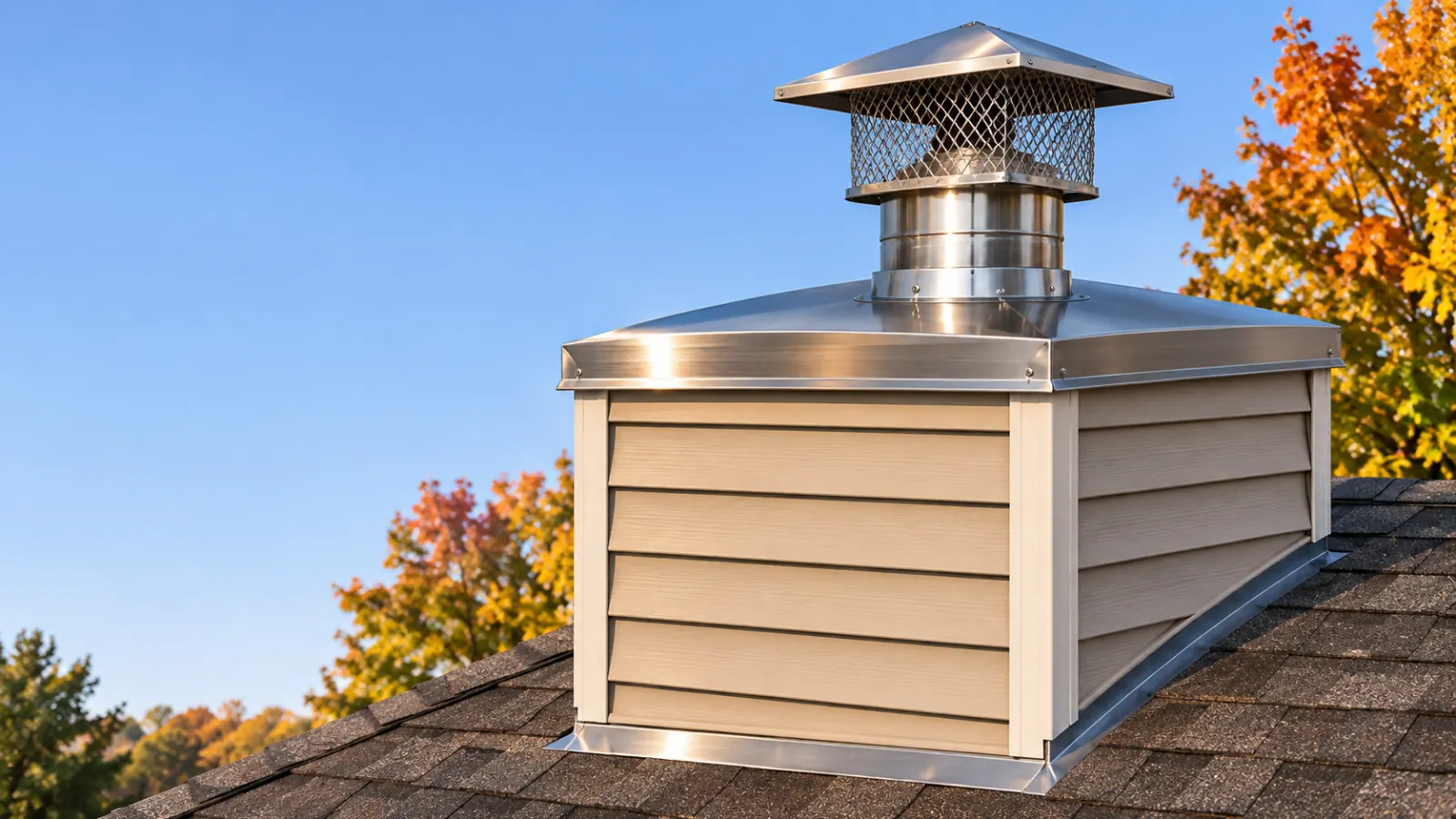
The top of a chimney takes more weather than almost any other part of a house. A chimney cap covers the flue opening with a metal hood and a mesh screen. It keeps rain and snow out of the flue, keeps birds, squirrels and raccoons from nesting inside, and on a wood-burning chimney the mesh catches larger embers before they land on the roof. A chase cover does a similar job for a different kind of chimney. On homes with factory-built fireplaces, the “chimney” is a wood-framed box clad in siding or stone, and the chase cover is the metal pan that seals its entire top, with the flue pipe passing through it.
When either one fails, water goes straight in. A missing cap lets rain run down the flue onto the damper and into the firebox, where it rusts metal parts and soaks the masonry. A rusted or sagging chase cover lets water pool and drip into the framed chase, rotting the framing, staining walls and ceilings near the fireplace and running rust streaks down the siding. In Rochester and across Southeast Wisconsin, snow sitting on a flat chase cover and repeated freeze-thaw cycles speed up that damage. Replacing a cap or cover is one of the most affordable ways to prevent bigger chimney leak repair later.
Many 1980s through 2000s homes still have the original galvanized chase cover. Galvanized steel rusts sooner than stainless, and once rust holes or seams open up, water gets into the chase. A new stainless or copper cover, made to fit, is the lasting fix.
A flat cover lets water and snowmelt sit on top, which leads to rust and leaks. Replacement covers are usually made with a slope or crimped cross-break so water runs off, plus a drip edge that sheds it away from the siding.
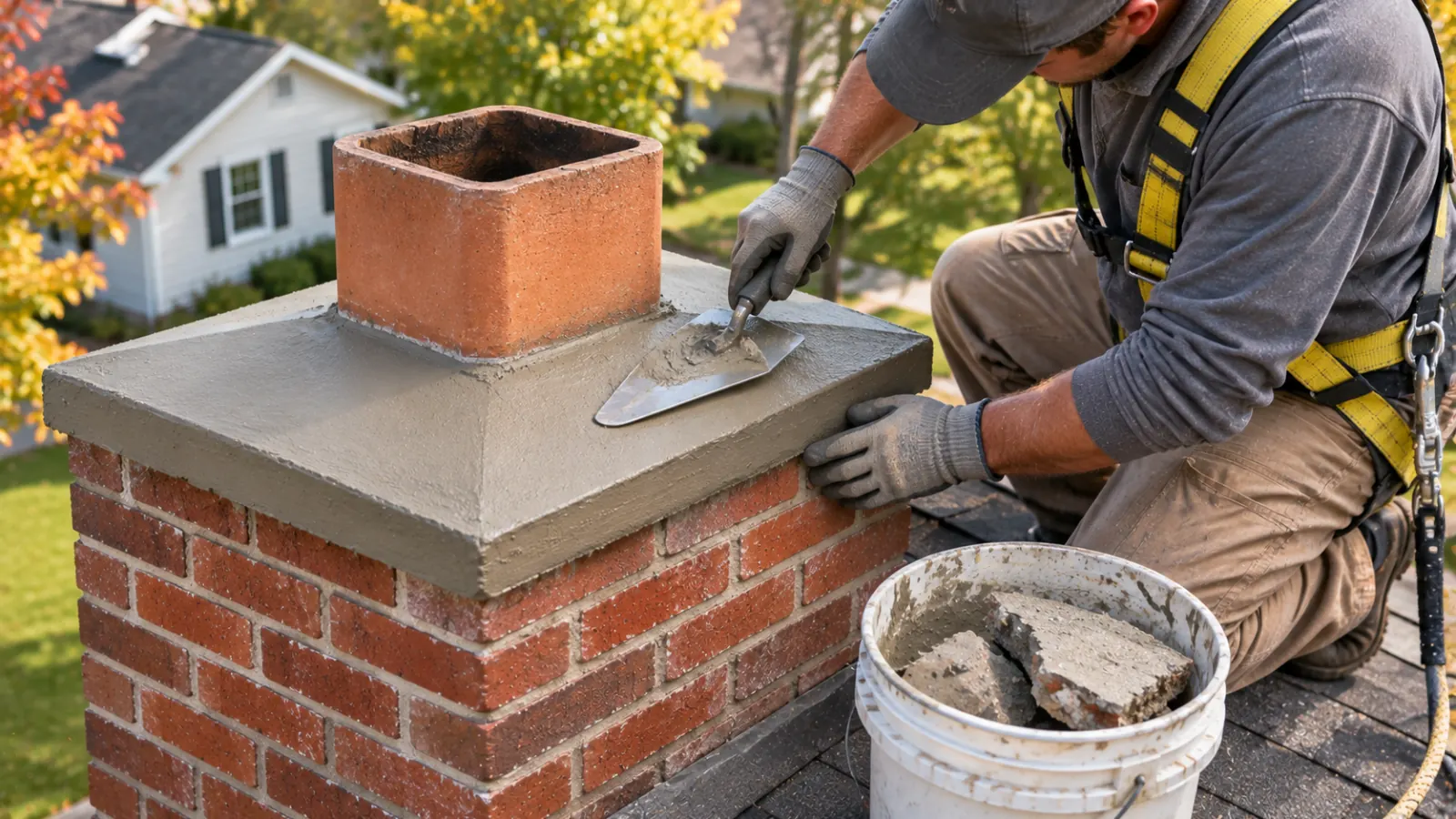
An uncapped masonry flue takes in rain, leaves and animals. A single-flue cap with a mesh screen fits over the flue tile and attaches to the tile or the crown.
Chimneys that serve a fireplace and a furnace or water heater often have two or more flues. One cap that covers the whole top can protect all of them and the crown at the same time.
Caps can rust, get bent by ice or blow off in storms. A cap that is distorted or discolored should also be checked as a possible sign of a past chimney fire.
When an old chase cover comes off, rotted framing, wet insulation or a damaged flue pipe sometimes turn up. Those need to be repaired before the new cover goes on, or the leak will come back.
| Job | What affects the price |
|---|---|
| Single-flue cap | Flue size and shape, material, how it attaches, roof pitch and access |
| Multi-flue or full-width cap | Chimney top size, number of flues, custom fabrication |
| Chase cover replacement | Chase dimensions, stainless or copper, slope or cross-break, storm collar and flue fit |
| Repairs found underneath | Rotted framing, wet insulation, siding or flashing damage |
| Related work | Crown repair or a sweep and inspection done at the same time |
These are categories to discuss, not prices. Ask for a written estimate that names the material and gauge of the cap or cover, whether it is custom-made, how it will be attached and how any hidden damage would be priced.
A chase cover should never hold water. A slope or cross-break and a drip edge send rain and snowmelt off the top and away from the siding below.
Stainless steel and copper hold up far longer in Wisconsin weather than galvanized or painted steel, which tends to rust.
Caps should fit the flue snugly and be fastened so wind can’t lift them. Chase covers should be sized to the chase, with a storm collar sealing around the flue pipe.
Mesh should keep out animals and catch larger embers without being so fine that it clogs with soot and restricts the draft.
Seeing rust streaks on the siding, water in the firebox or animals in the chimney? Call or request an estimate and describe what you see on top.
Free — no obligations
Call 262-218-2543 or request an estimate and describe any leaks, rust stains, noises or animals, and whether the chimney is brick or a framed chase with siding.
The chimney top is checked and measured, along with the crown, flue, flashing and, for chases, the framing and siding just below the cover.
Review the options: stock or custom, stainless or copper, single-flue or full-width. Chase covers are often made to measure.
The old cap or cover is removed, any damage underneath is repaired, and the new one is set, sealed and fastened. Most installs take a single visit once the part is ready.
A quick look during a yearly chimney inspection confirms the cap is secure, the mesh is clear and the cover is shedding water.
If your chimney is brick or stone all the way up and the top is concrete or masonry, it has a crown. If the chimney is covered in siding or stone veneer over a wood frame, and the top is a metal panel with a pipe sticking through, it has a chase cover. Many Southeast Wisconsin homes built from the 1980s on have framed chases.
Rust streaks below the top of a chase usually mean the chase cover is rusting. If it has started to rust through or sag, water may already be getting into the chase. It’s worth having it checked before the framing underneath is damaged.
A properly fitted cap with intact mesh keeps out birds, squirrels and raccoons. If animals are already inside, they need to be removed first. Chimney swifts are federally protected migratory birds, so a cap goes on after they leave for the season, not while they are nesting.
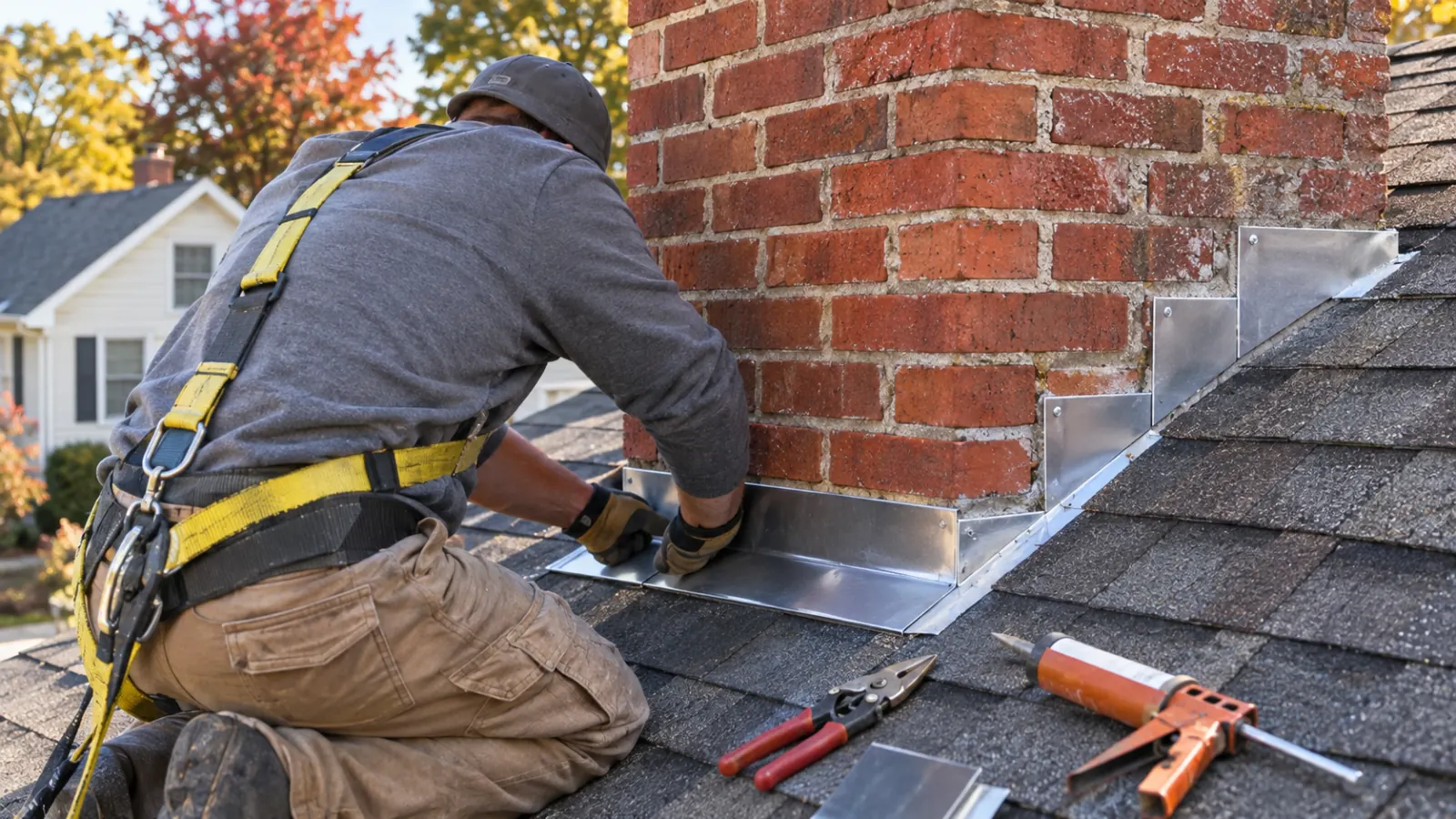
If water is getting in through an open flue, yes. Many leaks start somewhere else, though, such as the crown, flashing or brick. A cap is often one part of the fix, along with crown repair or new flashing.