Chimney Inspection & Cleaning
Chimney Inspection & Sweep in Rochester, WI
Whether you burn wood every winter, just bought a house or haven’t used the fireplace in years, an inspection shows where the chimney stands. You can ask about one at no cost.
Chimney Inspection & Cleaning
Whether you burn wood every winter, just bought a house or haven’t used the fireplace in years, an inspection shows where the chimney stands. You can ask about one at no cost.
Most chimney problems start where nobody can see them. Creosote builds up inside the flue every time wood burns. Clay flue tiles crack from heat and from water that gets in at the top. Birds and squirrels nest in uncapped flues, and mortar joints inside the chimney wear away long before the outside looks bad. A chimney inspection is the only way to know what is going on, and a sweep removes the soot and creosote that can feed a chimney fire. NFPA heating-safety guidance recommends having chimneys, fireplaces and vents inspected at least once a year and cleaned as needed.
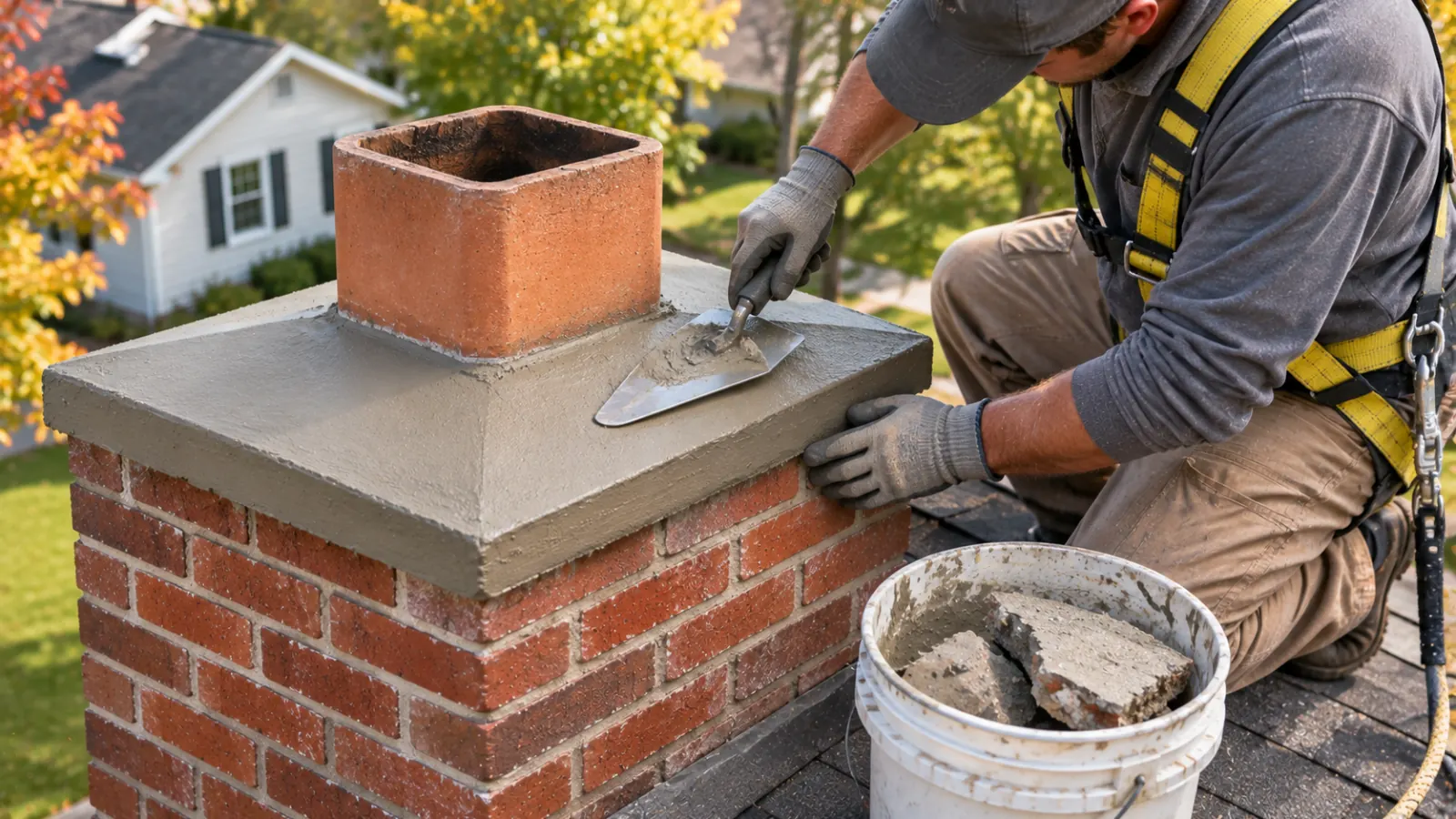
In Rochester and the rest of Southeast Wisconsin, heating season runs from fall well into spring, and many homes burn wood in a fireplace, stove or insert for much of it. Gas furnaces and water heaters vent through chimneys too, and those flues need checking even though they don’t collect creosote. An inspection also catches the freeze-thaw damage this climate is known for: cracked crowns, loose brick, failed flashing and broken flue tiles. Finding those early is what keeps chimney leak repair and masonry repair small.
The national standard for chimneys, NFPA 211, describes three levels of inspection. The right one depends on what has changed with the chimney or the home.
For a chimney that is in regular use with no changes. It covers the readily accessible parts of the chimney exterior and interior and the appliance connection, and it should come with every sweep. It confirms the chimney is structurally sound and free of blockages and buildup.
Recommended when a home is sold or transferred, before a flue is relined, when the appliance or fuel changes, and after a chimney fire, storm or other damaging event. It adds a video scan of the flue liner’s surfaces and joints and a look at accessible attics, crawl spaces and basements.
Used when a serious hidden problem is suspected, such as after a chimney fire or when a Level 2 inspection turns up damage it can’t fully see. It can involve removing parts of the chimney or building to reach concealed areas.
A clear written report of what was found, with photos or video when a camera is used, and a plain explanation of what needs repair now, what can be watched and what is fine.
Sweeping removes soot and creosote from the flue, smoke chamber and firebox. Industry guidance from the Chimney Safety Institute of America is to sweep a masonry fireplace once about 1/8 inch of sooty buildup has formed, and sooner if any glazed creosote is present. How fast that happens depends on how much wood is burned, how dry it is and how the fire is run.
A strong smoky or tar-like smell, especially in humid weather; black flakes falling into the firebox; smoke drifting into the room; fires that are hard to start or keep going; or a damper coated in black buildup.
Stoves and inserts often burn hotter and longer than an open fireplace, and slow, smoldering fires can build creosote quickly. Heavy users may need more than one sweep per season.
Creosote can harden into a shiny, tar-like glaze that is highly flammable and hard to remove. It often needs special tools or treatment rather than a standard brushing.
Gas appliances don’t leave creosote, but their flues can still be blocked by nests or debris, and their exhaust can damage an unlined or oversized flue. These flues should be inspected even if they rarely need sweeping.
Chimney fires can be loud and dramatic, with popping or cracking, a low rumble or roar, dense smoke and a strong burning smell. Many are slow-burning and go unnoticed until a later inspection. If you suspect a chimney fire, get everyone out and call 911. Afterward, don’t use the fireplace until it has been inspected. Signs that a chimney fire has happened include:
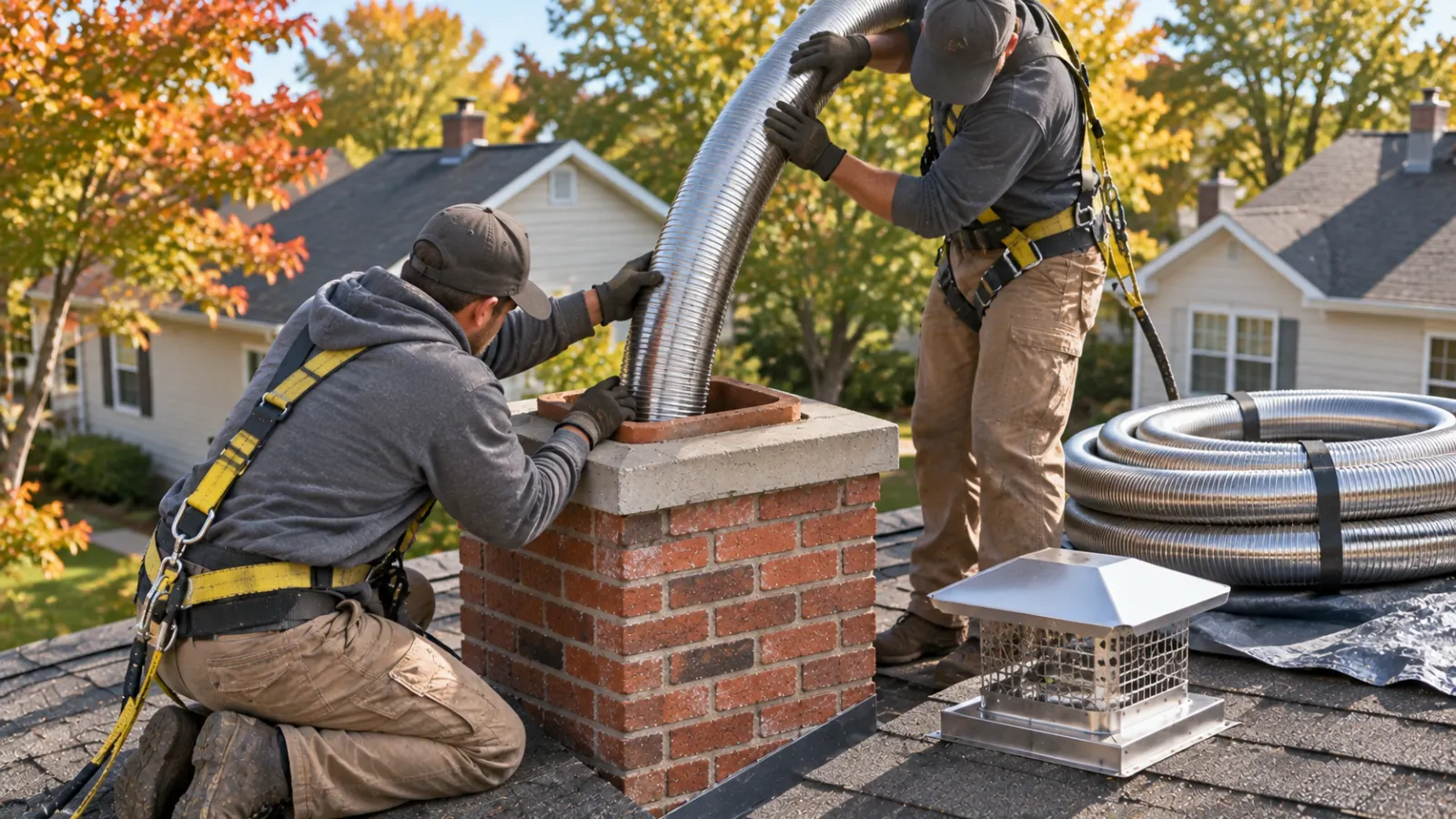
A Level 2 or Level 3 inspection after a fire shows whether the flue can be repaired or needs relining. A factory-built metal chimney damaged by a fire generally has to be replaced, not reused.
Just bought a home, switching to a stove or not sure when the chimney was last cleaned? Call or request an estimate and describe how you use your fireplace.
Free — no obligations
Call 262-218-2543 or request an estimate. Mention what the chimney serves, how often you use it, when it was last cleaned and whether you’re buying or selling the home.
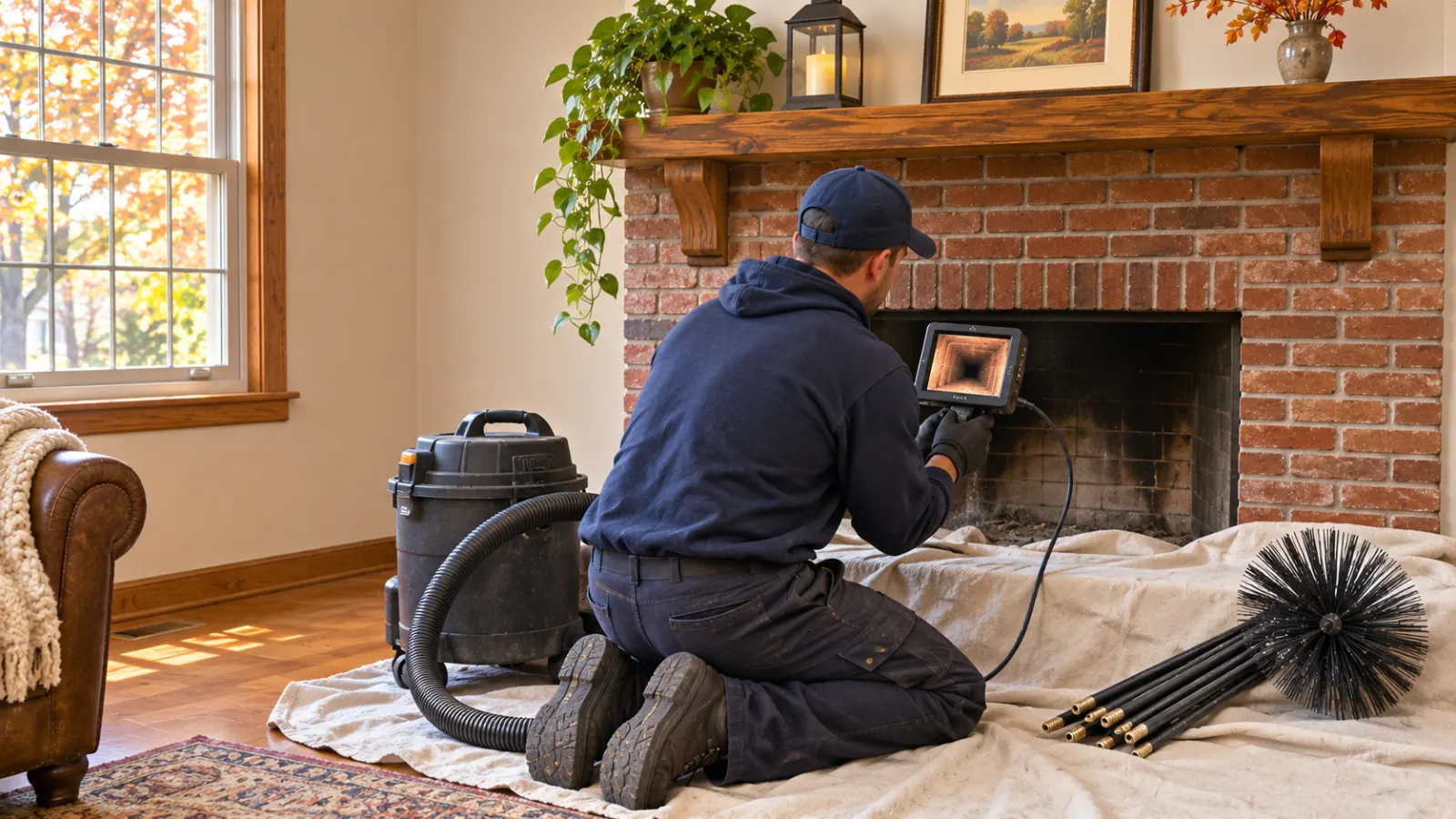
Drop cloths go down around the fireplace, and the opening is sealed off. Sweeping is usually done with brushes and a high-powered vacuum so soot stays out of the house.
The flue, smoke chamber, damper and firebox are cleaned and checked, plus the crown, cap and flashing from the roof when it is safe to get there. A camera is used for a Level 2 inspection.
Go over the report and any photos together. Ask which problems affect safety, which affect water damage and which can wait.
NFPA 211 recommends a Level 2 inspection when a property is sold or transferred, because a general home inspection only looks at what is visible and cannot see inside the flue. It is a national safety standard rather than a requirement for every sale, but it is a common and worthwhile step for buyers, especially for older homes and homes with wood-burning fireplaces.
It depends on use, not the calendar. A fireplace or stove used regularly through a Wisconsin winter may need sweeping every year, and heavy wood-stove users sometimes more often. A yearly inspection shows whether the buildup has reached the point where sweeping is needed.
Yes. They don’t produce creosote, but nests, debris, deteriorated liners and condensation damage can still block or damage the flue and let exhaust gases into the home. An annual check is still recommended.
If they are chimney swifts, they are protected under the federal Migratory Bird Treaty Act, and an active nest can’t be disturbed. The usual approach is to wait until the birds leave for the season, then sweep the chimney and install a cap to keep animals out.