
Chimney Repair Along the Fox River
Chimney Repair in Waterford, WI
Describe your chimney problem and ask about service in Waterford. It’s free and doesn’t obligate you to anything.
Chimney Repair Along the Fox River
Describe your chimney problem and ask about service in Waterford. It’s free and doesn’t obligate you to anything.
Waterford homes range from older houses in the village center to lake cottages, 1990s and 2000s subdivisions and rural homes on larger lots in the surrounding Town of Waterford. Many have brick chimneys serving a furnace or fireplace, and many of the newer homes have stone-veneer fireplace chimneys or framed chases with metal covers. Being close to the Fox River and the lakes means plenty of trees, shade and humidity, so crowns collect leaves and moss and masonry can stay damp longer after rain. Add Southeast Wisconsin’s freeze-thaw winters, and water that soaks into brick and mortar has every chance to freeze, expand and crack it.
Most chimney work in Waterford starts with a specific problem: a stain beside the fireplace, a cracked crown, loose bricks at the top or a rusted chase cover. The village grew up at a shallow spot on the Fox River where wagons once forded the water, and a dam built there in the 1830s powered early sawmills and grain mills. That dam created the Waterford Impoundment, which includes Tichigan Lake and connects to Buena Lake. With homes ranging from early-1900s cottages to houses built in the 2000s, a good repair begins with understanding how each chimney was built.
Some of Waterford’s older housing sits close to the river. Fox Point Park, a single-family neighborhood built mostly between 1930 and 1940, has homes that are now more than 80 years old, many with original masonry chimneys whose mortar and crowns have weathered many decades of Wisconsin winters. Buena Park, on the west side of Buena Lake, and the cottages and year-round homes around Tichigan Lake mix older lake houses with newer rebuilds, so chimneys there vary widely in age and condition.
Newer neighborhoods followed. Fox River Hills was built largely between 1987 and 1997, and Blue Heron Pointe along the east shore of the Fox River between 1995 and 2003. Homes in these subdivisions often have brick or stone-veneer fireplace chimneys or factory-built fireplaces in framed chases, now old enough that crowns, chase covers and flashing are coming due for attention.
Across the 53185 zip code, Waterford chimneys share the same challenges: freeze-thaw cycles, wet and shaded sites near the water, and flashing stressed by snow and ice.
Tree-covered lots near the river and lakes drop leaves and needles onto the chimney. Debris holds moisture on the crown, which speeds up cracking. A cap and a sound, sloped crown help; see chimney crown repair.
Many 1990s and 2000s homes with factory-built fireplaces have a galvanized chase cover on top of a framed chase. After a couple of decades it can rust, sag and leak into the chase, staining the wall or ceiling beside the fireplace.
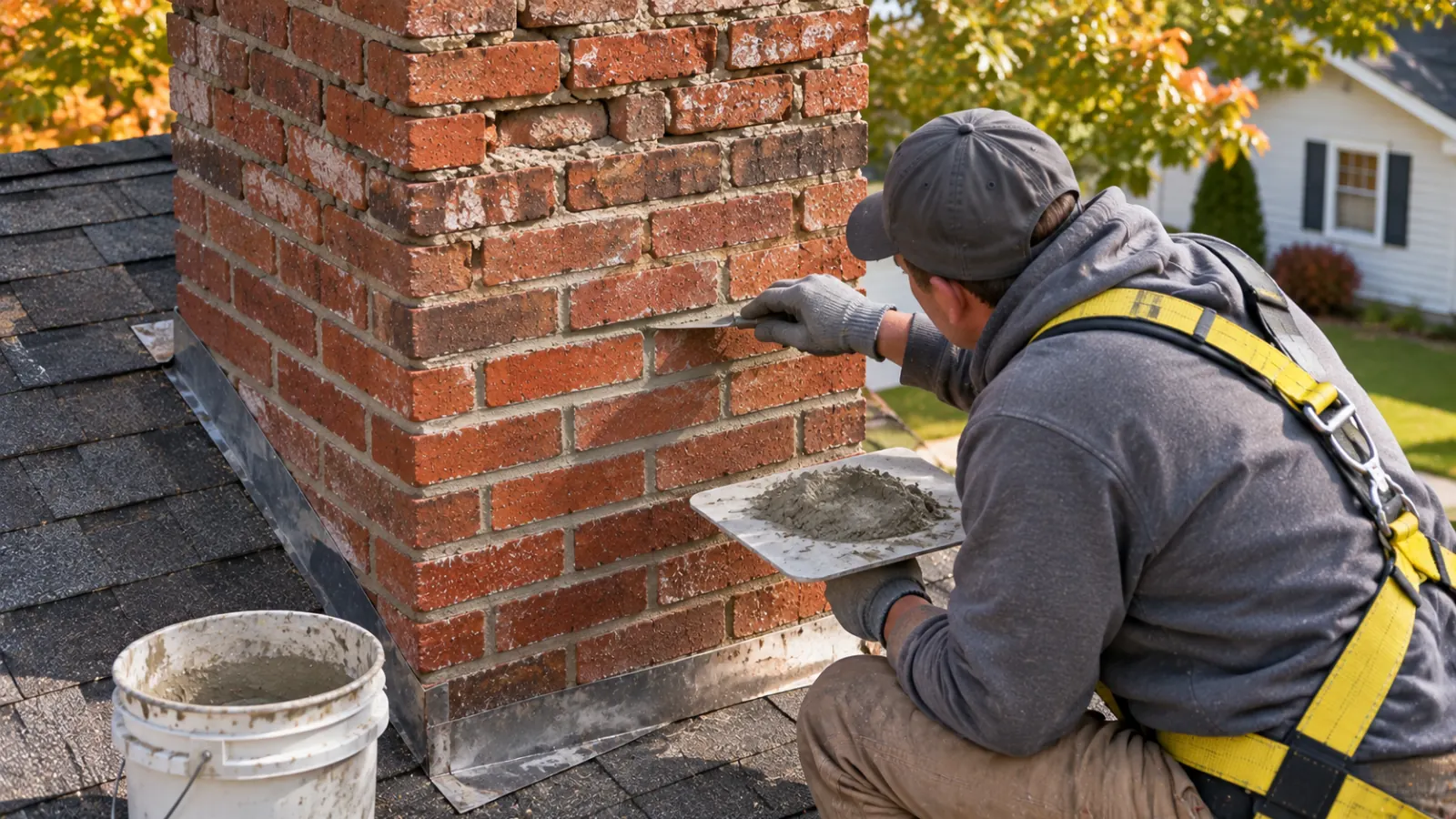
Chimneys on homes from the 1930s and earlier often have soft mortar washing out of the joints above the roofline. Tuckpointing with a compatible mortar restores the joints before bricks start to loosen.
Stone and brick veneer chimneys depend on flashing, a proper crown and a weather barrier behind the veneer. When any of these fails, water can travel behind the stone and show up inside long after a storm.
Brick that stays damp in shade freezes and thaws repeatedly through winter. Faces flake off, usually starting near the top. Replacing damaged brick and fixing the source of moisture stops the spread.
Older lake cottages converted to year-round homes may now have a modern furnace or a wood stove venting into an old flue. Cracked or missing liners are common; see chimney liner repair and relining.
Masonry, veneer and factory-built chimneys need different repairs. The estimate should reflect what your chimney is actually made of and how it was built.
Water can enter at the crown, chase cover, flashing or through the veneer and appear far below. Fixing only the visible stain rarely solves it.
Shade and moisture near the water slow drying. Schedule masonry work in the warmer months, before winter freeze-thaw cycles begin.
Ask about materials, how much of the chimney is covered and how hidden damage would be handled. Confirm service for your Waterford address before arranging work.
Most Waterford chimneys can be repaired: a new crown or chase cover, resealed flashing, replaced bricks or tuckpointing above the roofline. Repair makes sense when the masonry or chase framing below is still sound and the problem is limited to one area.
A chimney rebuild becomes worth discussing when bricks are loose, the chimney leans, spalling is widespread or repeated repairs have not held. For framed chases, rot in the framing beneath a leaking cover may need repair before the new cover goes on. Lake homes just north in Wind Lake see many of the same chase and crown problems.
Learn more about each type of chimney repair work:
They are separate municipalities with their own offices, even though both use Waterford addresses. Which one you are in determines where permits for larger chimney projects come from. The Village of Waterford’s code does not allow work to begin before a required permit is issued, so check before structural work starts.
Many original chase covers are galvanized steel, which eventually rusts, especially when the cover is flat and holds water. As it sags, water pools and finds its way into the chase. A replacement cover in stainless steel, with a slight slope or crease to shed water, is the usual long-term fix.
Chimneys at cottages that sat unused for parts of the year may have animal nests, debris or damage nobody noticed. If a seasonal home is now used year-round with a new furnace or stove, have the flue inspected to make sure it is lined and sized for the appliance.
Late spring through early fall is the best window for masonry and crown work, since mortar and concrete need above-freezing temperatures to cure. Booking an assessment in summer gives time to finish repairs before the heating season and the first hard freeze.
Have a chimney leak, cracked crown or crumbling brick in Waterford? Call or request an estimate with your address and what you’re seeing.
Free — no obligations