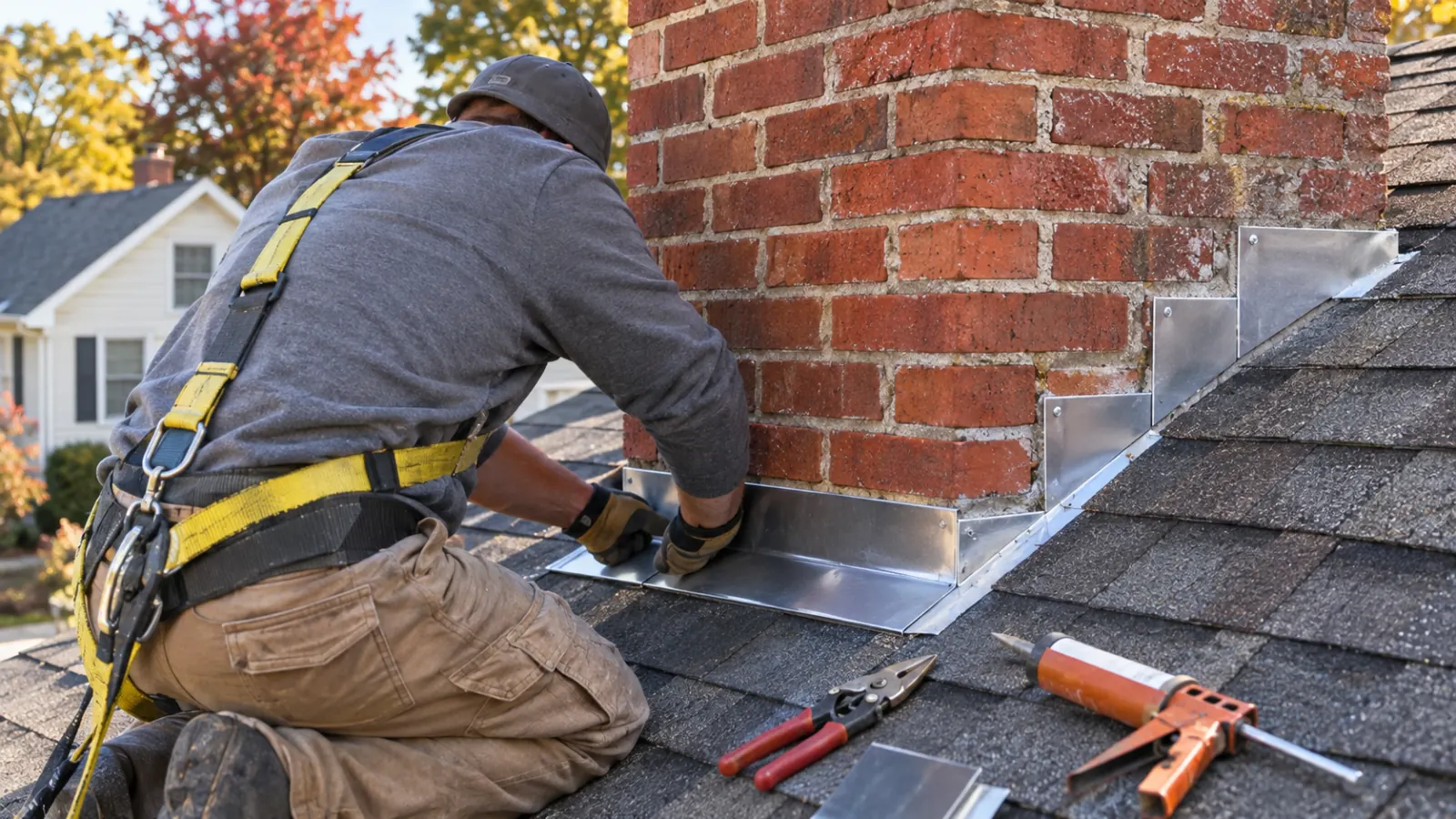
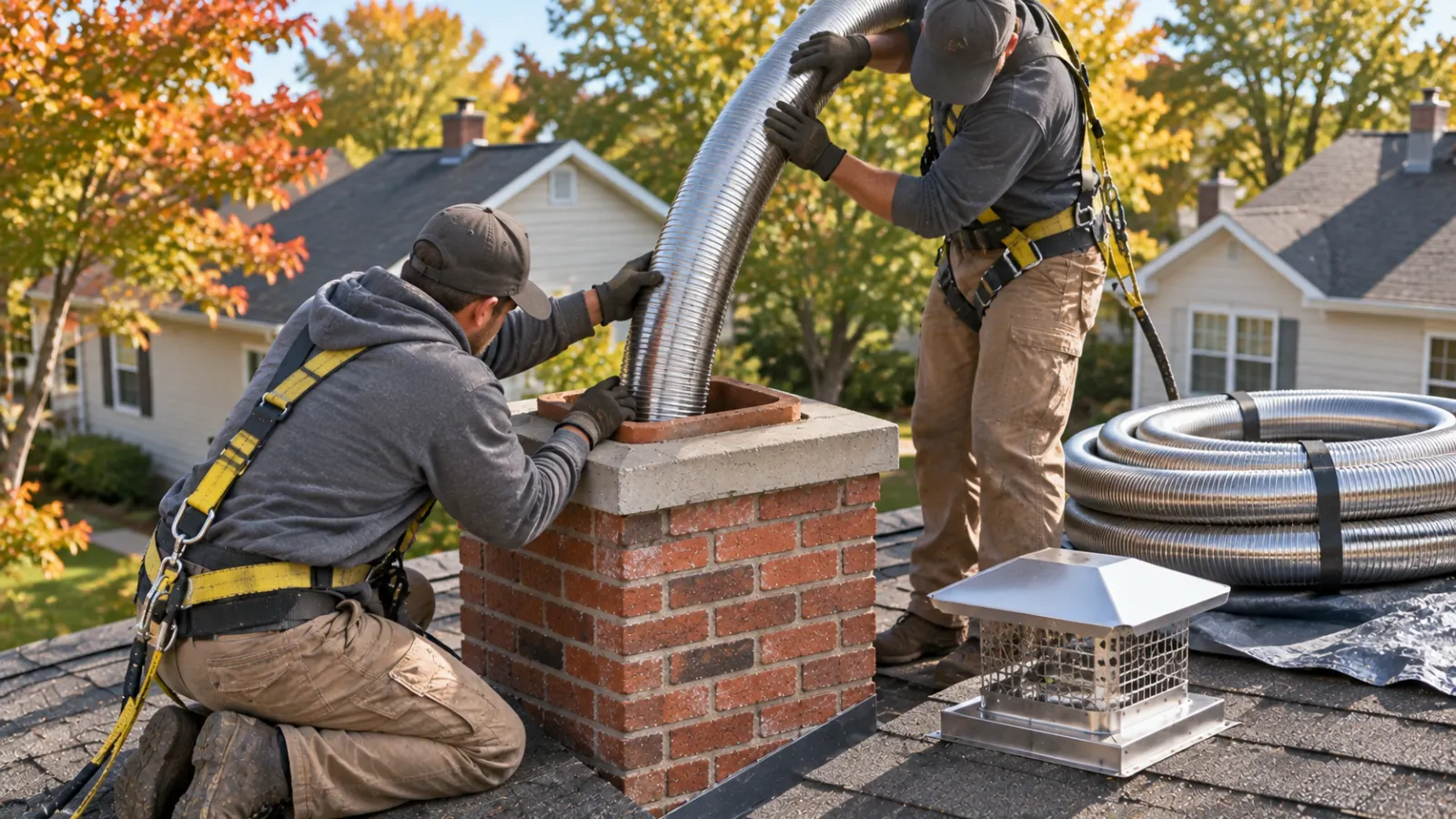
Two workers feeding a flexible stainless steel liner down a brick chimney flue from the roof

Flue Liner Repair & Stainless Relining

Chimney Liner Repair & Relining in Rochester, WI

Cracked flue tiles, a new furnace that needs a properly sized vent or an older chimney with no liner at all usually call for a closer look inside the flue. It’s free to ask, with no obligation.

What the Flue Liner Does and Why It Fails

The liner is the passage inside the chimney that carries smoke and combustion gases up and out. In most older masonry chimneys it is a stack of square or rectangular clay tiles; some older homes have no liner at all, just the inside of the brick. A liner protects the masonry from heat and corrosive byproducts, keeps the flue sized correctly for the appliance it serves, and helps keep heat away from nearby wood framing. Liner repair and relining cover everything from repairing gaps in tile joints to installing a new stainless steel liner or a cast-in-place lining. You often can’t see a liner problem from outside. Signs include pieces of tile or flaky mortar in the firebox or at the cleanout, a fireplace that smokes back into the room, a strong odor, water or white staining inside, or an inspection that found cracked tiles.

Liners fail for several reasons. Clay tiles crack from age, settling, rapid heating or a chimney fire. Freeze-thaw water entering from a cracked crown erodes the mortar joints between tiles. And when an older home in Rochester trades an old furnace for a high-efficiency gas furnace or water heater, the cooler exhaust can condense inside a large masonry flue, producing acidic moisture that eats away at tile joints and brick. Because the right fix depends on what the flue serves, a camera inspection of the inside of the chimney is usually the first step.
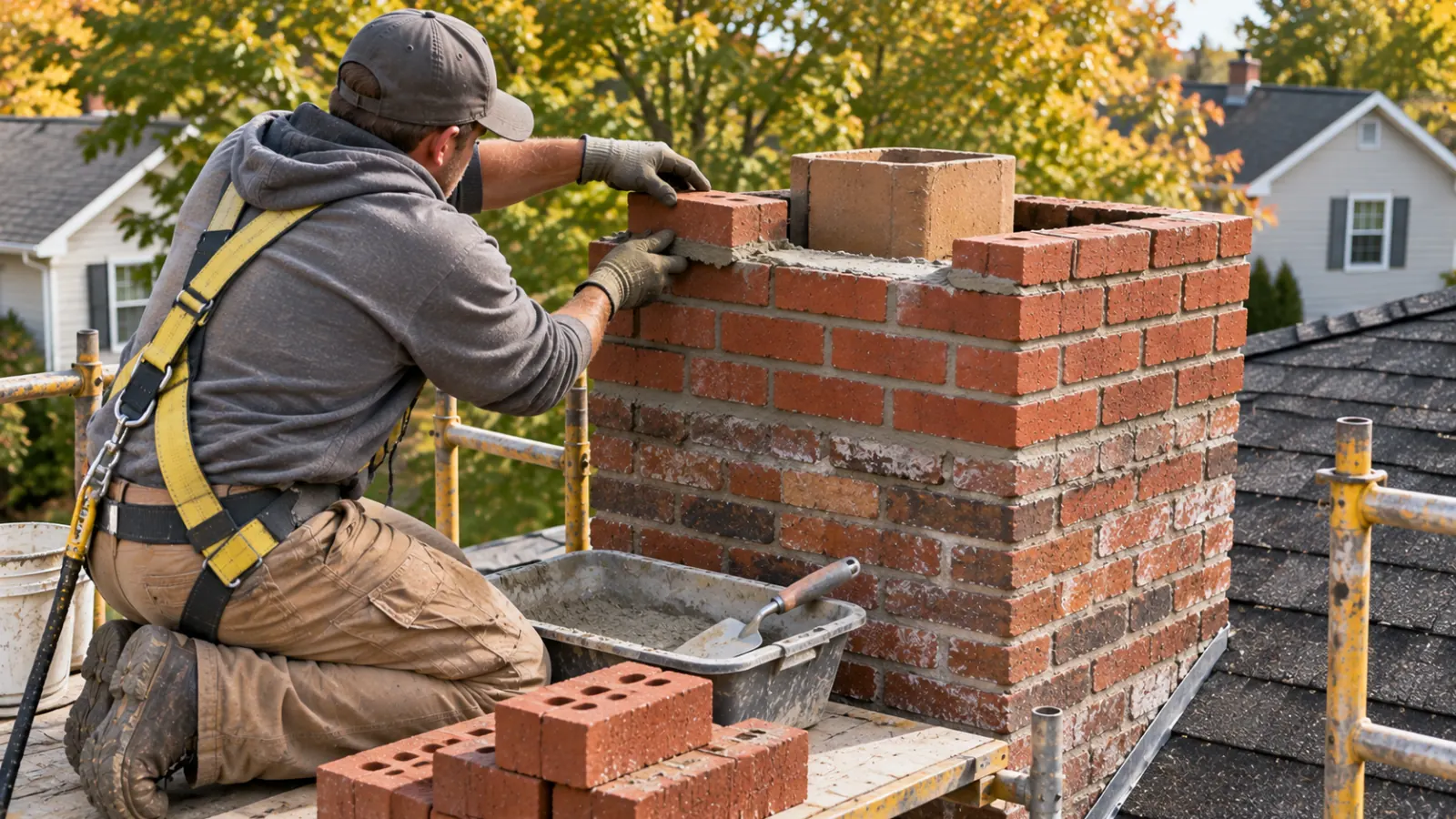
Mason laying new brick courses on a chimney rebuilt above the roofline, with a scaffold platform on the roof

Areas Served

Common Liner and Relining Work for Wisconsin Homes

Stainless steel liner for a furnace or water heater

Gas appliances need a flue sized to their output. A smooth stainless steel liner run from the appliance connection to the top of the chimney gives the exhaust a properly sized path and protects the masonry from condensation. Alloy choice depends on the fuel, so the appliance details matter.

Relining a wood-burning fireplace or stove

Wood fires produce intense heat and creosote. A heavier-duty stainless liner, sized and insulated to manufacturer instructions, is a common way to restore a cracked or unlined flue to safe use for a fireplace, wood stove or insert.

Fireplace insert connections

Installing a wood, gas or pellet insert into an existing fireplace usually calls for a dedicated liner running from the insert to the top of the chimney. Venting an insert into a large open flue without one can lead to poor draft and creosote buildup.

Repairing clay tile joints

When tiles are intact but the mortar joints between them have eroded, some systems allow the joints to be repaired from inside the flue. Whether that is practical depends on how many joints are open and the condition of the tiles themselves.

Cast-in-place lining

A cementitious lining can be formed inside an existing flue, filling cracks and creating a smooth, continuous surface. It can suit older or oddly shaped chimneys, though it is a bigger job than dropping in a stainless liner.

Liner after a chimney fire

A chimney fire can crack tiles along much of the flue in minutes, sometimes without anyone noticing. Signs include puffy, honeycomb-like creosote, warped damper or cap metal and pieces of tile in the firebox. Stop using the chimney until a full inspection is done.

Understanding Chimney Relining Costs

JobWhat affects the price
Camera inspectionNumber of flues, access to the top and the appliance connection, whether a written report is needed
Stainless liner for a gas applianceFlue height, diameter required, alloy, connections at the appliance, cap and top plate
Liner for wood-burning useLiner gauge and alloy, insulation requirements, removing damaged tile to fit the right size
Clay tile joint repairNumber of open joints, flue shape, access
Cast-in-place liningFlue length and shape, number of passes, preparation of the existing flue

These are cost factors, not quotes. What a relining job involves depends on the appliance, the height and shape of the flue and what the camera shows inside. Ask for a written estimate that names the liner type, size and alloy, whether insulation is included, and what happens if tiles must be removed to fit the correct size.

Worker sealing new step flashing and counterflashing where a brick chimney meets an asphalt shingle roof

Choosing the Right Chimney Liner

Sized to the appliance

A liner that is too large can lead to poor draft and condensation; too small and the appliance may not vent safely. Sizing should follow the appliance manufacturer’s instructions and applicable code.

Matched to the fuel

Gas, wood, oil and pellet appliances produce different exhaust. Stainless liners come in different alloys and gauges for that reason, so ask which one is proposed and why.

Installed as a listed system

Liners are tested and listed as complete systems, including the top plate, cap and connections. Mixing parts or skipping required insulation can affect both safety and the warranty.

Inspected after installation

Under NFPA 211, as summarized by the Chimney Safety Institute of America, a Level 2 inspection is recommended when a chimney is relined. Ask for photos or a camera view of the finished work.

Find Out What’s Inside Your Flue

Describe the appliance or fireplace the chimney serves and any debris, odors or draft problems you’ve noticed, and ask what the next step should be.

Call 262-218-2543

Free — no obligations

How Chimney Relining Usually Goes

1. Describe the chimney and appliance

Call 262-218-2543 or request an estimate and mention what the chimney vents: a furnace, water heater, fireplace, stove or insert, and whether anything has changed recently.

2. Inspect inside the flue

A camera inspection shows the condition of the tiles and joints along the full height, along with the crown, cap and appliance connection.

3. Choose the liner and review the estimate

Go over the liner type, size, alloy and insulation, plus any crown or masonry work that should be done first so the new liner isn’t exposed to water.

4. Install and connect

The liner is lowered from the top, connected at the appliance or insert, and finished with a top plate and cap. Any change in scope should be explained before work continues.

5. Confirm and keep records

Ask to see the finished installation and keep the liner’s documentation. It is useful for future inspections, insurance questions and when you sell the home.

Chimney Liner Questions

Do I need a new liner if I replace my furnace?

Often, yes. High-efficiency furnaces that vent through PVC pipe out the side of the house no longer use the chimney at all, which can leave a water heater alone in a flue that is now oversized for it. Mid-efficiency gas appliances that do use the chimney usually need a properly sized liner. Ask the HVAC installer and a chimney professional how the new setup will vent.

Can I use my fireplace if the flue tiles are cracked?

It is not recommended. Cracked tiles can let heat and gases reach the surrounding masonry and nearby wood framing, and can allow combustion gases into the home. Hold off on fires until the flue has been inspected and repaired or relined.

How long does a stainless steel chimney liner last?

A properly sized, correctly installed stainless liner with the right alloy for the fuel can last many years, and many manufacturers offer long warranties when the liner is installed and maintained as listed. Regular inspections and sweeping for wood-burning use help it reach that lifespan.

Is relining required when buying an older home?

Not automatically, but a home sale is a common time to find out. The Chimney Safety Institute of America’s summary of NFPA 211 recommends a Level 2 inspection at the sale or transfer of a property, which includes a camera look inside the flue. If the liner is damaged, that is useful to know before closing.

Chimney Repair Services in Rochester, WI

Call 262-218-2543Free Estimate