Chimney Repair in Central Racine County
Chimney Repair in Union Grove, WI
Describe your chimney problem and ask about service in Union Grove. Asking costs nothing and commits you to nothing.
Chimney Repair in Central Racine County
Describe your chimney problem and ask about service in Union Grove. Asking costs nothing and commits you to nothing.
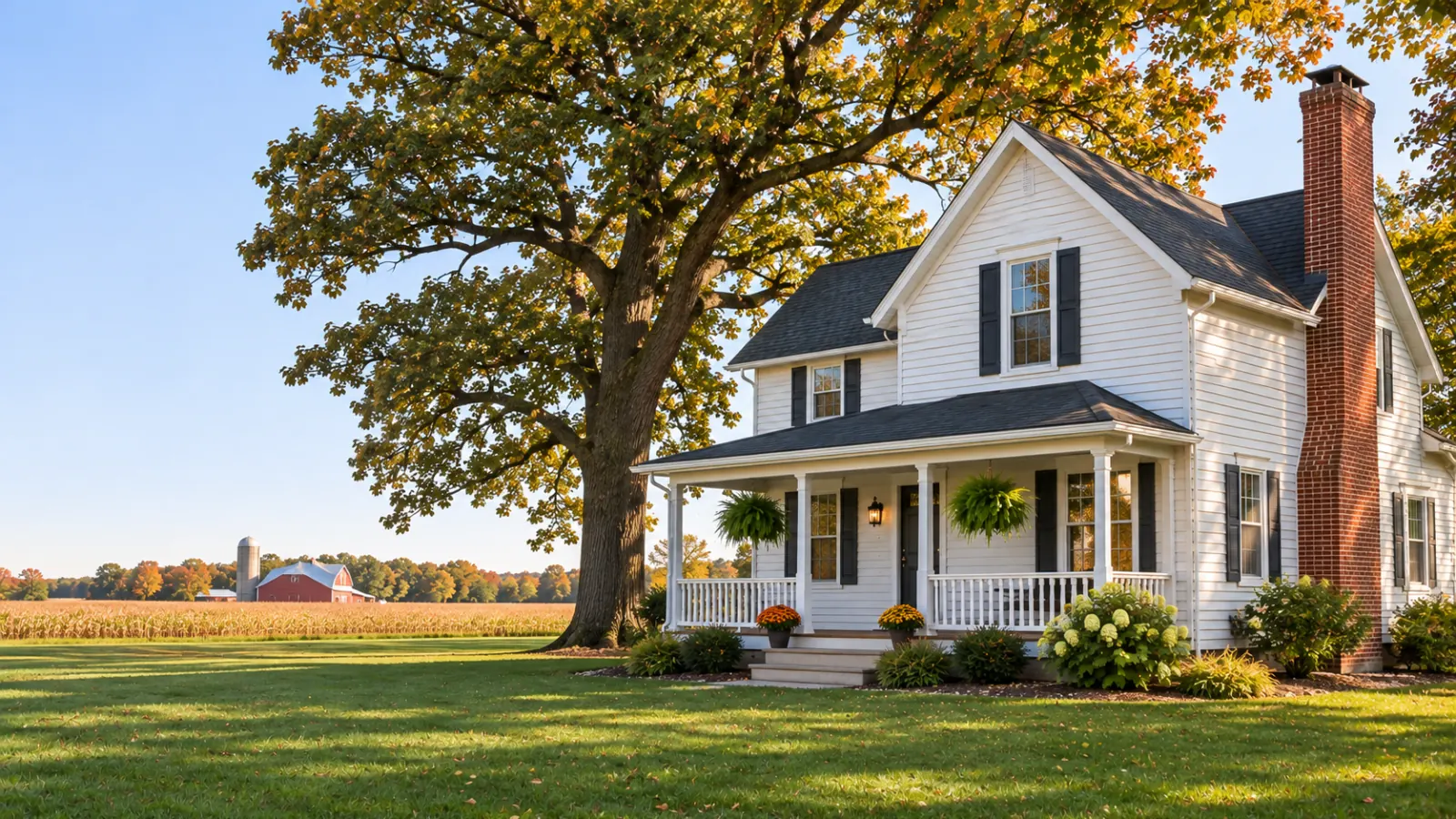
Union Grove sits in the middle of Racine County, surrounded by farmland, and its chimneys reflect that mix. Homes near the village center include older houses with tall brick chimneys built when coal and wood heat were the norm. Newer subdivisions on the edges of the village have brick or stone-veneer fireplace chimneys and framed chases. Out on the farms and country roads with Union Grove addresses, many farmhouses have chimneys that have stood exposed to open-field wind and weather for generations. All of them face the same Southeast Wisconsin pattern of wet springs, summer storms and long winters that freeze and thaw water inside brick and mortar.
Most chimney work in Union Grove starts with a repair: a cracked crown, flashing that leaks during snowmelt, mortar washing out of the top courses or a flue that needs relining for a new furnace. The village has a long history. Governor Henry Dodge is credited with the name, combining “Union” with the grove of bur oaks that stood on the west side of the land, and Union Grove grew as a stop on the Racine & Southwestern rail line that still runs through town. Today the village has about 4,800 residents, with housing built across more than a century.
The older blocks around the village center and the rail line hold Union Grove’s oldest homes. Many are two-story frame houses with brick chimneys that once served wood stoves or coal furnaces and now vent gas appliances. Those chimneys often have soft original mortar, thin mortar caps instead of proper crowns, and clay liners or no liners at all. After decades of patching, it is common to find several generations of repairs on a single chimney.
Newer subdivisions around the edges of the village were built later and tend to have fireplace chimneys with brick or stone veneer, or factory-built fireplaces in framed chases. Beyond the village limits, farmhouses and rural homes with Union Grove mailing addresses are actually in the Village of Yorkville, the Town of Dover or the Town of Paris, according to the village’s resident guide. Those homes often have larger exterior chimneys that take the full force of the wind across open fields.
Throughout the 53182 zip code, Union Grove chimneys face the same issues: freeze-thaw damage, wind-driven rain and snow, and aging flues serving modern appliances.
On open farmland, rain and snow hit chimneys sideways. Water is pushed into mortar joints and around flashing that would stay dry on a sheltered lot. Weathered joints often need tuckpointing on the windward faces first.
Large old chimneys may have served several stoves over the years, with abandoned thimbles, patched openings and unlined flues. They need a careful look inside and out before they are trusted with a modern appliance.
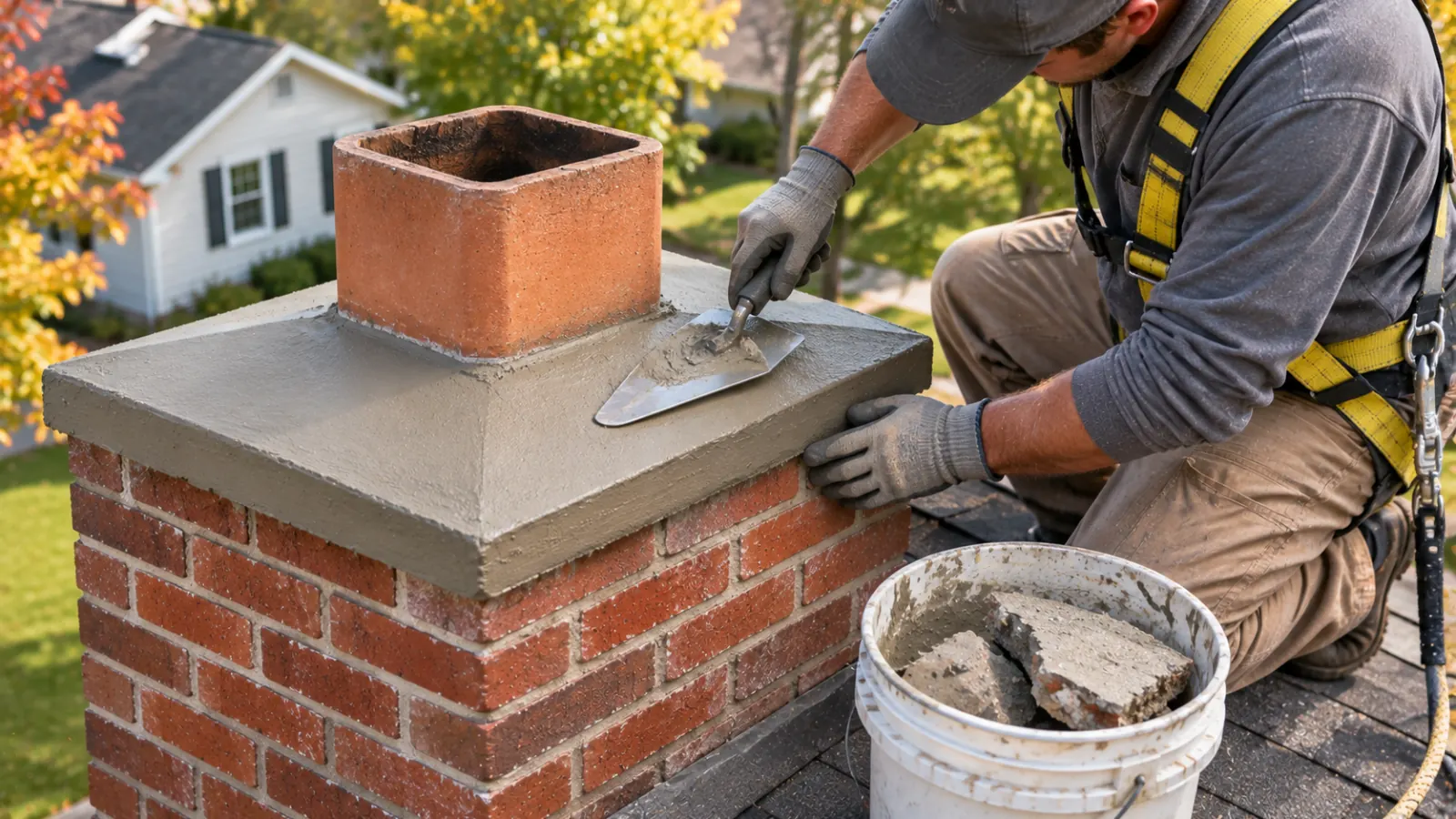
Many older chimneys were finished with a thin mortar layer on top instead of a real crown. It cracks, lets water into the chimney and speeds up damage below. A new, properly built crown with an overhang is often the fix.
Snow drifting against a chimney melts and refreezes, pushing water under old flashing. Stains that show up in late winter or early spring often trace back here and call for chimney leak repair.
Replacing an old furnace can leave a water heater alone in an oversized flue, or send cooler exhaust into a chimney that wasn’t designed for it. Condensation then damages the masonry from inside, and relining is often recommended.
Some older homes have a chimney that no longer vents anything. Left uncapped and unmaintained, it keeps absorbing water and deteriorating. The options are to repair and cap it, shorten it below the roofline or remove it.
A farmhouse chimney and a subdivision fireplace chase are very different. Recommendations should be based on the actual chimney, flue and appliance.
Water stains, spalling and loose bricks are symptoms. The crown, cap, flashing or flue condensation is usually behind them.
Open exposure means more wind, rain and drifting snow. Schedule masonry work in warm months and before the heating season starts.
Ask about materials, how much of the chimney is covered and how surprises would be priced. Confirm service for your Union Grove address before arranging work.
Many Union Grove chimneys can be repaired with a new crown and cap, tuckpointing above the roofline, replacement of a few damaged bricks or new flashing. Repair keeps the original masonry and is usually the right call when the brick is sound.
A chimney rebuild is worth discussing when the top of the chimney is loose, leaning or badly spalled, or when years of patching have left little sound masonry. If the flue is damaged, relining can be planned at the same time.
Learn more about each type of chimney repair work:
Inside the village, building permits go through the Union Grove Municipal Center at 925 15th Avenue, and the village’s fee schedule doubles fees when work starts without a required permit. If your Union Grove address is actually in Yorkville, Dover or Paris, that municipality handles permits. Larger structural projects are the most likely to need one.
Not until it has been inspected. Old farmhouse chimneys may be unlined, have cracked tiles, open joints or old stove-pipe openings that were never sealed properly. A Level 2 chimney inspection, which includes a camera look inside the flue, shows whether it is safe to use or needs repairs or relining first.
The side facing prevailing wind and weather gets the most rain and freeze-thaw exposure, and the side with the most sun may dry faster. It is common for one or two faces to need tuckpointing or brick replacement long before the others. A good assessment checks all four faces.
It depends on your plans. Some homeowners keep it for a future fireplace or stove and maintain it with a cap and sound crown. Others shorten or remove it to stop ongoing repairs. Ask for the costs and trade-offs of each option, including the roof work involved.
Have a chimney leak, cracked crown or crumbling brick in Union Grove? Call or request an estimate and describe what you’ve noticed.
Free — no obligations