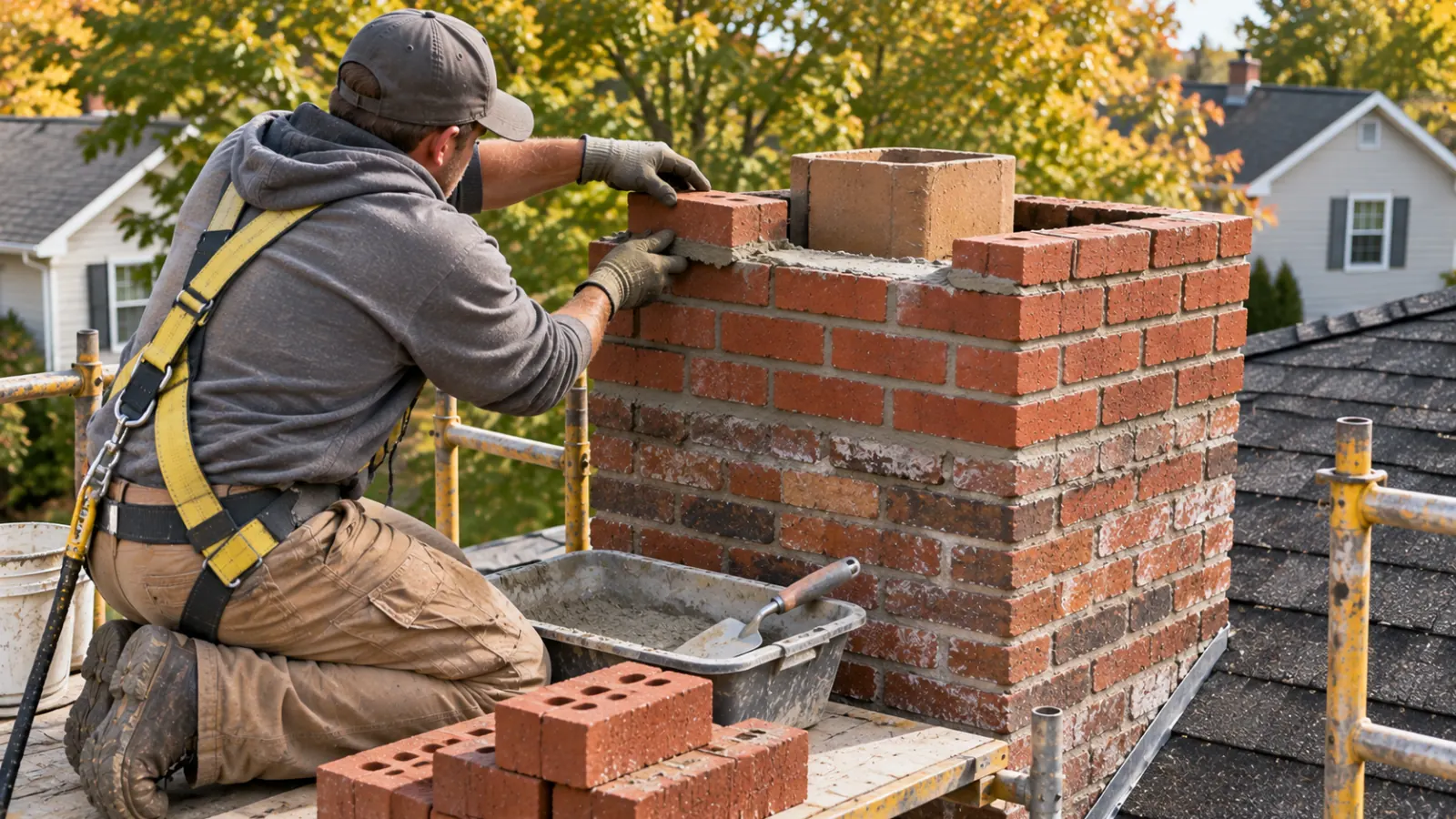
Worker troweling a new sloped concrete crown on top of a brick chimney around the clay flue tile

Chimney Crown Repair & Replacement

Chimney Crown Repair in Rochester, WI

The crown is the cap of concrete on top of the chimney, and once it cracks, every rain and snowmelt goes straight into the masonry. Asking what yours needs won’t cost you anything.

Why the Top of the Chimney Matters Most

The crown, sometimes called the chimney wash, is the slab that covers the top of the brick around the flue tile. Its job is simple: shed water away from the flue and off the edges of the chimney so it doesn’t soak into the brick below. Chimney crown repair ranges from sealing hairline cracks with a flexible crown coating to breaking off a failed crown and casting a new one. Signs a crown needs attention include visible cracks or chunks missing on top, a crown that is flat or slopes toward the flue, moss or standing water, pieces of concrete in the gutters, spalling brick in the top few courses, and water stains or rust in the firebox and damper.

Many crowns were never built to last. A common shortcut is a thin layer of leftover mortar troweled over the top bricks with no overhang and no gap around the flue tile. Mortar is not designed for that exposure, and when the flue tile expands with heat, it cracks a crown that is bonded tightly to it. In Rochester’s winters, any crack fills with water, freezes and widens, so a small defect can become a crumbling crown in a few seasons. A proper assessment decides whether the existing crown can be sealed or needs to be replaced.
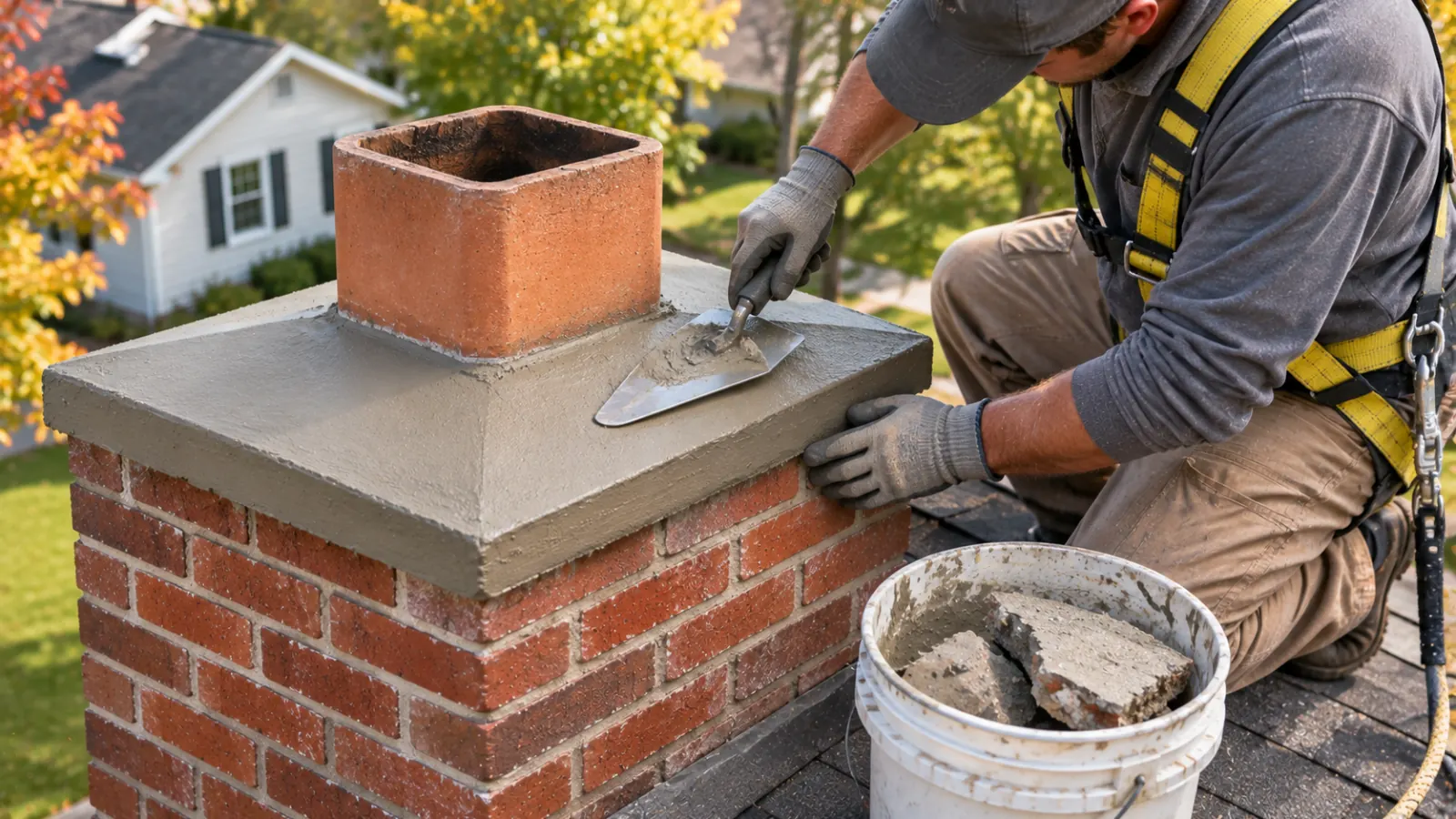
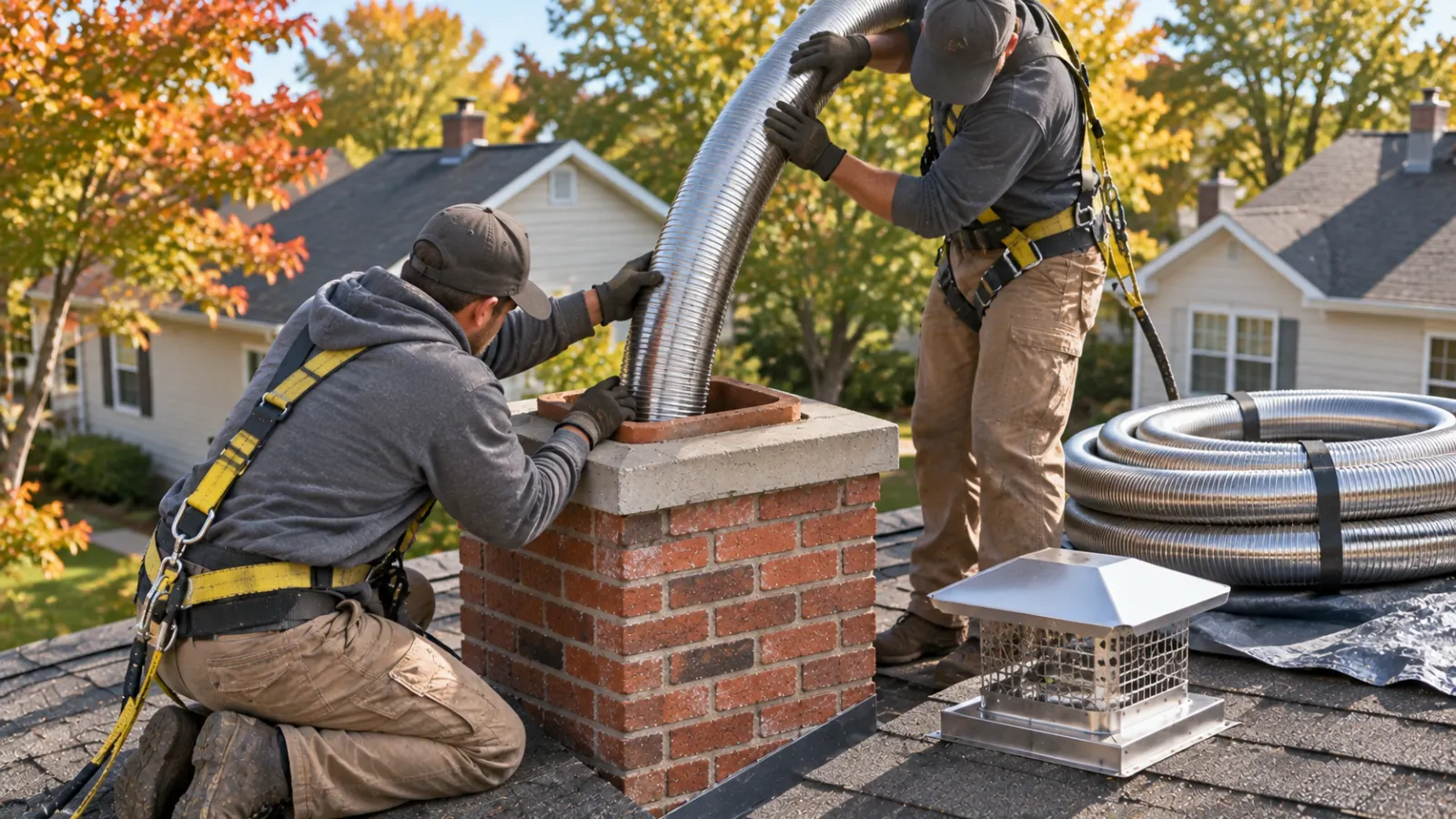
Two workers feeding a flexible stainless steel liner down a brick chimney flue from the roof

Areas Served

Common Chimney Crown Work in Southeast Wisconsin

Sealing hairline cracks

When the crown is structurally sound but has fine surface cracks, an elastomeric crown sealer can bridge them and flex with temperature changes. It is a cost-effective fix for crowns caught early, though it will not save one that is already breaking apart.

Full crown replacement

A crown that is crumbling, badly cracked or built from thin mortar is removed down to the top course of brick and replaced. A well-built replacement uses a proper concrete mix, slopes away from the flue on all sides and is thick enough to resist freeze-thaw cracking.

Adding an overhang and drip edge

A crown that ends flush with the brick lets water run straight down the chimney face. Building the new crown to overhang the brick, with a drip groove cut underneath, sends water clear of the masonry and reduces staining and spalling.

Expansion gap at the flue tile

Clay flue tiles expand when heated. A crown cast tight against the tile will crack as the tile moves. A small gap around the tile, sealed with a flexible sealant, lets both parts move independently.

Precast and stainless crowns

On some chimneys, a precast concrete crown or a stainless steel chase cover is a better fit than one poured in place. Factory-built chimneys with framed chases use a metal chase cover, which can rust through and leak; chase cover replacement is a common repair on newer homes.

Cap and screen installed with the crown

Crown work is a good time to add or replace a chimney cap. A cap keeps rain off the crown and out of the flue, and the mesh screen keeps out birds, squirrels and leaves. Multi-flue chimneys often use a single cap covering all the flues.

Understanding Chimney Crown Repair Costs

JobWhat affects the price
Crown sealingCrown size, number and width of cracks, cleaning and prep needed
Crown replacementChimney dimensions, number of flues, demolition of the old crown, form work for an overhang
Chase cover replacementChase size, custom fabrication, condition of the framing and siding below
Chimney capSingle or multi-flue, material, flue size, whether the crown can hold the cap’s anchors
Related masonry repairSpalled brick or loose top courses uncovered when the old crown is removed

These are categories to discuss, not prices. The cost depends on what the crown is made of, how damaged it is and what is found underneath once it comes off. Ask for a written estimate that says whether the crown will be sealed or replaced, how it will be built, and how extra masonry repairs would be priced.

Mason laying new brick courses on a chimney rebuilt above the roofline, with a scaffold platform on the roof

What a Well-Built Chimney Crown Looks Like

Slopes away on every side

Water should never sit on top of the chimney. The crown should rise toward the flue and fall toward the edges so rain and snowmelt drain off quickly.

Overhangs the brick

An overhang of a couple of inches with a drip edge underneath keeps water from running down the face of the chimney, which protects the brick and mortar below.

Made of the right material

Crowns built from a proper concrete or crown mix with enough thickness hold up far better than a thin layer of mortar spread over the top bricks.

Allows for flue movement

A flexible joint between the crown and the flue tile prevents the cracking that happens when the tile expands with heat and the crown cannot move with it.

Have a Cracked Chimney Crown Checked

Tell us what you can see from the ground or what turned up in the gutters, and ask whether the crown can be sealed or should be replaced.

Call 262-218-2543

Free — no obligations

How Chimney Crown Repair Usually Goes

1. Tell us what’s going on

Call 262-218-2543 or request an estimate and describe any cracks, falling debris or leaks you have noticed, plus roughly how old the house is.

2. Inspect the crown and top courses

The crown, flue tiles, cap and the top few courses of brick are checked up close, since crown damage often spreads into the masonry just below it.

3. Decide between sealing and replacing

Review whether the crown is sound enough to seal or needs replacement, and whether a cap, tuckpointing or flashing work should be done at the same time.

4. Crown work in suitable weather

New crowns need temperatures above freezing to cure. The old crown is removed, forms are set for the overhang, and the new crown is poured and finished.

5. Review and maintain

Ask what was done and when the crown should be looked at again. A yearly check of the top of the chimney catches new cracks while they are still small.

Chimney Crown Questions

What is the difference between a chimney crown and a chimney cap?

The crown is the masonry or concrete slab covering the top of the chimney around the flue. The cap is the metal cover with a mesh screen that sits over the flue opening. The crown protects the brick; the cap keeps rain, debris and animals out of the flue itself. Most chimneys benefit from having both in good condition.

Can a cracked crown cause a leak inside the house?

Yes, and it is one of the most common causes. Water entering through a cracked crown soaks into the brick and can run down the inside of the chimney, showing up as stains on walls or ceilings, rust on the damper, or water in the firebox. Leaks that persist after flashing repairs often trace back to the crown.

How long does a chimney crown last?

A properly built concrete crown with an overhang can last for decades. A thin mortar wash on top of the bricks may crack within a few years, especially with Wisconsin freeze-thaw cycles. Sealing small cracks early and keeping a cap on the chimney both extend a crown’s life.

Can crown repair be done in winter?

Concrete and mortar need temperatures above freezing to cure properly, so full crown replacement is usually scheduled from late spring to early fall in Southeast Wisconsin. If a crown fails in winter, a temporary cover or sealing may limit water entry until the weather allows permanent work.

Chimney Repair Services in Rochester, WI

Call 262-218-2543Free Estimate